
Flowers
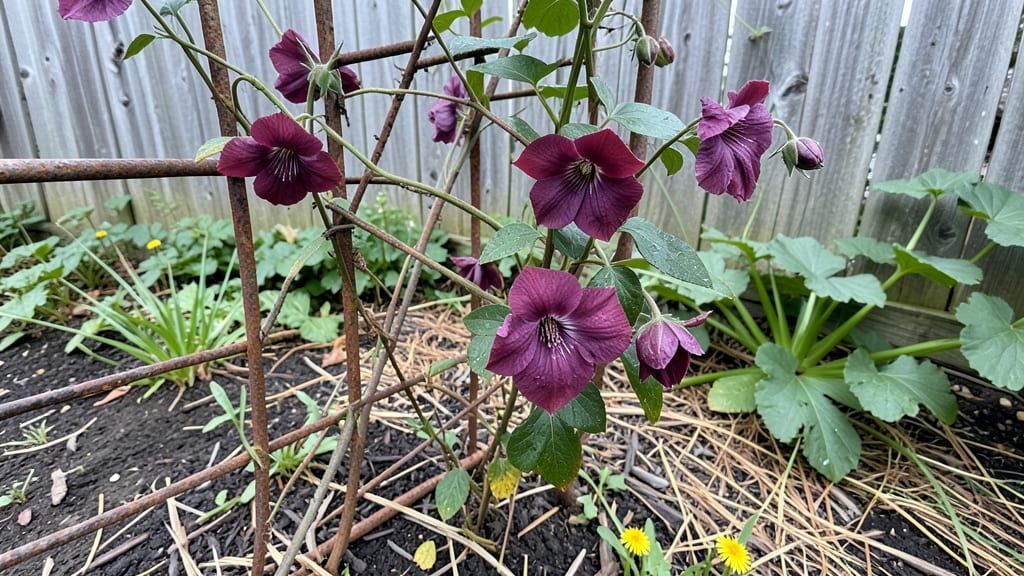
Growing a red flowered clematis 🌸 means unlocking a vine that bursts with bold blooms—if you know the right tricks.
Struggling to keep your red flowered clematis blooming all season? The secret lies in strategic pruning—yet most gardeners get it wrong, stunting growth or triggering bare stems. With the right techniques, you can transform your clematis into a vibrant, year-round showstopper.
This isn’t just about cutting back willy-nilly—it’s about understanding when to prune, how much to trim, and which stems to save for maximum flowers. Whether you’re dealing with early spring shoots or late-season blooms, the timing and method make all the difference.
Below, I’ll walk you through the exact steps to prune your clematis for continuous red blooms, avoid common mistakes, and keep your vine thriving in USDA Zone 6a and beyond.
How to prune red flowered clematis by growth type for maximum blooms
Pruning your red flowered clematis correctly is the key to unlocking year-round blooms. Unlike other vines, clematis fall into three distinct pruning groups, each requiring a unique approach.
Misidentifying your clematis type can lead to bare stems or missed blooms—so let’s dive into the specifics to keep your plant thriving.
Group 1 clematis (early bloomers) produce flowers on previous year’s growth, while Group 2 clematis (repeat bloomers) flower on both old and new wood. Group 3 clematis (late bloomers) only bloom on current season’s growth.
Understanding these differences ensures you prune at the right time and avoid cutting off potential blooms.
Timing is everything. Pruning too late can reduce next year’s flowers, while pruning too early may remove dormant buds that haven’t yet sprouted. Below, we break down the pruning schedule and techniques for each group to maximize those stunning red blooms all season long.
🌱
| Group Type | Bloom Time | Pruning Time | What to Cut | Key Notes |
|---|---|---|---|---|
| Group 1 | Early spring (March-April) | Late winter (Feb) | Dead/damaged stems only | Never cut back healthy stems—blooms form on old wood. |
| Group 2 | Spring & summer (May-Aug) | Late winter (Feb) & post-bloom (Aug) | 1/3 of oldest stems (Feb) + dead flowers (Aug) | Balance old wood (early blooms) and new growth (late blooms). |
| Group 3 | Late summer (Aug-Sept) | Early spring (March) | All stems to 2-3 buds from base | Only blooms on new wood—aggressive pruning encouraged. |
Group 1 clematis, like 'Jackmanii' or 'Niobe', are the early spring bloomers. Their flowers appear on last year’s growth, so pruning too aggressively can leave you with no blooms.
Instead, focus on removing only dead or diseased stems in late winter, just as new shoots begin to emerge.
For Group 2 clematis, such as 'The President' or 'Comtesse de Bouchard', you’ll need a two-step approach. First, prune in late winter by cutting back one-third of the oldest stems to encourage new growth.
Then, after the first flush of blooms, deadhead spent flowers to promote a second bloom cycle in late summer.
If you have Group 3 clematis, like 'Durandii' or 'Perle d’Azur', you’re in luck—they’re the easiest to prune. These late summer bloomers only flower on current year’s growth, so you can cut all stems back to 2-3 buds in early spring.
This aggressive pruning stimulates vigorous new growth and abundant flowers later in the season.
When pruning, always use clean, sharp pruners to make 45-degree cuts just above a bud or node. Avoid leaving stubs, as they can attract disease. For red flowered clematis, aim to prune in dry, mild weather to reduce stress on the plant and encourage faster healing.
One of the biggest mistakes is pruning at the wrong time. For example, cutting back Group 1 clematis in spring can remove next year’s blooms, while pruning Group 3 clematis too late may delay or reduce flowering. Always double-check your clematis type before reaching for those shears!
🌷
Step-by-step pruning process: when, what, and how to cut for year-round red flowers
Pruning your red flowered clematis at the right time can mean the difference between sparse blooms and a lush, year-round display. The key is timing—cut too early or too late, and you risk losing flowers or damaging new growth.
I’ve pruned clematis for years, and I’ve learned that three critical pruning stages—early spring, post-bloom, and late summer—keep my vines thriving. Let’s dive into the exact steps to follow for each stage.
Before you grab your pruning shears, gather your tools: sharp bypass pruners for clean cuts, gloves to protect your hands, and a disinfectant to prevent disease spread. Always cut at a 45-degree angle just above a bud or leaf node.
This angle helps water run off and reduces rot. Dead stems are easy to spot—they’re brown, brittle, and won’t snap when bent, while live stems are green and flexible.
-
Early Spring (March)
Remove all dead or damaged stems down to the base. Cut back Group 1 clematis (early bloomers) by 1/3 to encourage new growth. For Group 2 and 3 (repeat bloomers), leave 2-3 healthy buds from the base. -
Post-Bloom (June-July)
After the first flush of red blooms fades, trim spent flowers back to the nearest strong pair of leaves. This redirects energy to new flower production for late-season blooms. Avoid cutting into old wood. -
Late Summer (August-September)
Lightly prune to shape the vine and remove any weak or crossing stems. For Group 3 clematis (late bloomers), avoid heavy pruning now—focus on airflow and light penetration to prevent disease. -
Winter (October-November)
Leave Group 1 clematis unpruned until spring. For Group 2 and 3, cut back tender growth to protect against frost. Mulch the base to insulate roots during winter dormancy.
One of my biggest mistakes early on was pruning at the wrong time. I once cut back my Group 3 clematis in late summer, thinking it would encourage more blooms—only to end up with bare stems by fall.
Now, I follow a strict schedule: early spring for cleanup, post-bloom for renewal, and late summer for shaping. This keeps my vines healthy and bursting with vibrant red flowers from spring to frost.
Pay close attention to the growth habit of your specific clematis variety. Group 1 clematis (like 'Early Sensation') bloom on previous year’s wood, so prune lightly in spring. Group 2 and 3 clematis (like 'Jackmanii' or 'The President') bloom on new wood, so you can prune harder in early spring.
Always label your plants if you’re unsure which group they belong to—it saves headaches later!
After pruning, give your clematis a balanced fertilizer (like 5-10-10) to support new growth. Water deeply at the base to reduce stress, and avoid wetting the foliage to prevent fungal diseases. Within weeks, you’ll see fresh green shoots and, eventually, those stunning red blooms you’re after.
Remember, pruning isn’t just about cutting—it’s about encouraging healthy growth and maximizing blooms. With these steps, your red flowered clematis will reward you with a season-long floral display that turns heads in your garden. Happy pruning! 🌷