
Succulent
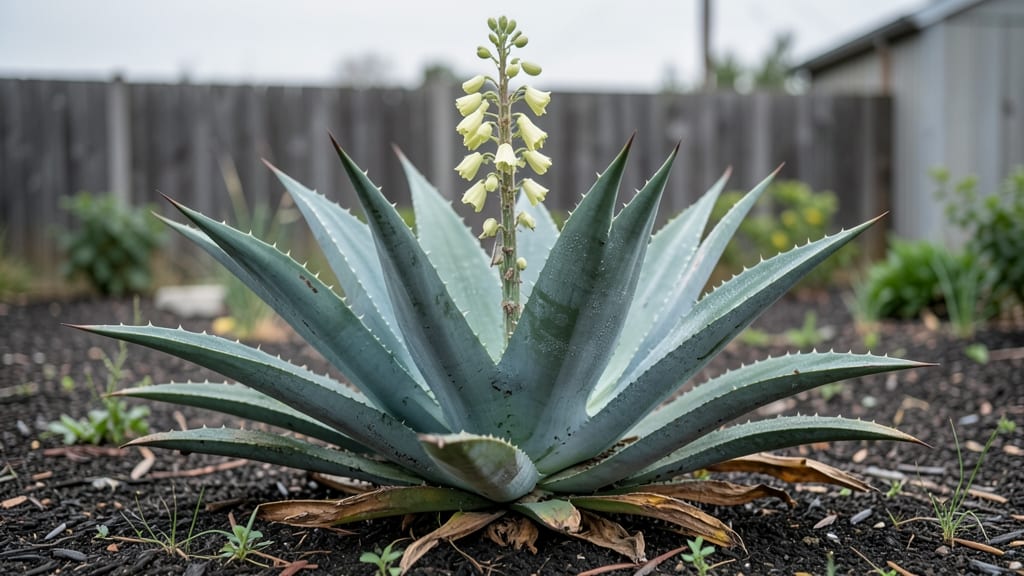
The tequila plant flower signals the end of your agave’s long journey—and missing it could mean losing your harvest entirely.
That one-in-a-lifetime bloom 🌵 appears only after decades of growth, yet spotting it at the right moment determines whether your piña (the heart of the plant) is ready for harvest or already past its prime.
For growers in Zone 9b like Phoenix, timing is everything, and knowing what to look for could save you years of waiting.
These towering succulents thrive in winter’s crisp air, but their flowers—tall, dramatic, and often yellow—are a fleeting spectacle. Unlike most plants, agave blooms just once, then dies, leaving behind pups that may take another 50 years to mature.
That’s why recognizing the signs early is your secret to maximizing quality before the plant’s final act.
In this guide, you’ll learn how to spot those critical blooms, what they reveal about your plant’s maturity, and how to use them to plan your harvest—without losing the golden window when the piña is at its peak.

How to identify tequila plant flowers: key visual clues and timing
The tequila plant (Agave tequilana) produces one of the most dramatic floral displays in the succulent world—a towering 6-12 foot inflorescence that emerges from its center after 7-10 years of growth.
These flowers are your first clue that your plant is reaching maturity, but they’re often confused with other agave species. Knowing their unique characteristics helps you distinguish them from lookalikes like Agave americana or Agave parryi.
Tequila plant flowers bloom in a panicle shape, with thousands of small, yellow-green flowers clustered along a thick, woody stem. The blooms open sequentially from the bottom up, creating a cascading effect that can last 2-4 weeks in ideal conditions.
Unlike other agaves, these flowers emit a sweet, honey-like fragrance at night, attracting pollinators like moths and bats.
| Feature | Tequila Plant Flower (Agave tequilana) | Other Agave Species |
|---|---|---|
| Flower Color | Yellow-green | Yellow, red, or purple |
| Flower Shape | Panicle (tall, branched) | Spike or raceme |
| Stem Height | 6-12 feet | 2-6 feet |
| Blooming Season | Late spring-early summer | Varies by species |
| Fragrance | Sweet, honey-like (night) | Minimal or none |
| Plant Age at Bloom | 7-10+ years | 5-15 years (varies) |
| Leaf Characteristics | Thick, blue-green, 2-3 ft long | Varies (some spiky, some smooth) |
The timing of tequila plant flowers depends on your USDA hardiness zone and climate. In Zone 9b (like Mexico’s Jalisco region), blooms typically appear between March and May, coinciding with the start of the rainy season.
In cooler climates (Zones 8-9a), expect flowers to push through in late April to June, as the plant needs consistent warmth to trigger blooming.
If you’re growing tequila plants in containers, their flowering cycle may shift slightly due to root restriction. Container-grown agaves often bloom 1-2 years later than their in-ground counterparts because they experience stress from limited space.
To encourage blooming, ensure your container has at least 12 inches of depth and well-draining soil to mimic natural conditions.
One of the most misleading signs of a tequila plant’s maturity is the development of a central flower bud, which looks like a small, tight rosette. This bud can appear 2-3 years before the actual bloom, so don’t rush to harvest your plant just because you spot it.
Wait until the bud elongates into a stem—a clear signal that flowering is imminent.
Regional variations in blooming time are significant. For example, in Southern California (Zone 10a), tequila plants may bloom as early as February, while those in Arizona (Zone 9a) might not flower until May or June.
Always monitor your plant’s leaf color and firmness alongside flower development, as these are secondary indicators of maturity.
After flowering, the tequila plant’s piña (heart) begins to develop rapidly, reaching its peak size in 6-12 months. This is when you’ll want to harvest the agave for tequila production.
However, if you’re growing the plant purely for ornamental purposes, you can prune the flower stalk to redirect the plant’s energy into leaf and root growth.
To maximize your chances of spotting blooms, I recommend photographing your plant monthly during the spring months. Look for subtle changes in the central rosette, such as tightening leaves or a slightly raised bud. These early signs are often overlooked but critical for predicting bloom timing accurately.
Finally, remember that tequila plants are monocarpic, meaning they flower only once in their lifetime before dying. This makes each bloom a once-in-a-lifetime event, so pay close attention to the visual clues and timing to ensure you don’t miss it. The effort is worth it—spotting those
What tequila plant flowers mean for your harvest: signs of maturity and risks
When your tequila agave finally sends up its flower stalk, it’s a rare and exciting moment—but also a critical signal about your plant’s maturity. These 6-foot-tall blooms appear only once in a plant’s 50-100-year lifespan, marking the end of its productive cycle for tequila production.
Understanding what these flowers reveal can help you time your harvest perfectly or avoid costly mistakes.
The color shift from green to yellow-green on the flower stalk is your first clue. A healthy tequila agave will develop a tight, compact piña (the heart) when the flower stalk emerges from the center.
This is your prime harvest window—typically 1-2 weeks before the flower fully opens. Waiting too long risks bitter flavors in your tequila.
⚠️ WARNING ⚠️ Flower presence ≠ harvest readiness. A premature flower stalk (before 8-10 years) signals stress or disease, often caused by overwatering or poor soil drainage.
If the stalk appears weak, discolored, or rotting at the base, your plant may be compromised. Remove the stalk immediately to redirect energy to root and piña development. Never harvest from a stressed agave—it yields low-quality sap and weakens the plant further.
Pay close attention to the flower bud’s size. A tight, closed bud (like a green corn husk) means your piña is still developing. Once the bud starts unfurling yellow petals, count 7-10 days until harvest.
The piña’s weight is your best indicator—it should feel heavy for its size, signaling maximum sugar concentration for tequila production.
However, over-mature agaves with open flowers produce bitter, low-yield sap. The piña’s skin will turn brown or leathery, and the flesh may shrink from dehydration. If you spot blackened tips on leaves or mushy bases, your plant is past its prime.
In this case, harvest immediately—even if the piña isn’t ideal—to salvage what you can before the plant dies after flowering.
For optimal tequila quality, balance flower timing with piña firmness. Press the piña’s skin gently—it should yield slightly (like a ripe avocado) but not feel soft or mushy.
If the flower stalk is still closed but the piña is heavy and firm, you’ve hit the sweet spot. Harvest within 3-5 days to capture peak sugar content and aromatic complexity.
Remember: Flowering is a one-time event. Once the tequila agave blooms, it dies after seed production. Treat every flower signal as a harvest deadline—not a flexible timeline.
With practice, you’ll learn to read your plant’s cues like a pro, ensuring every harvest delivers premium tequila-worthy agave. 🌵