
Flowers
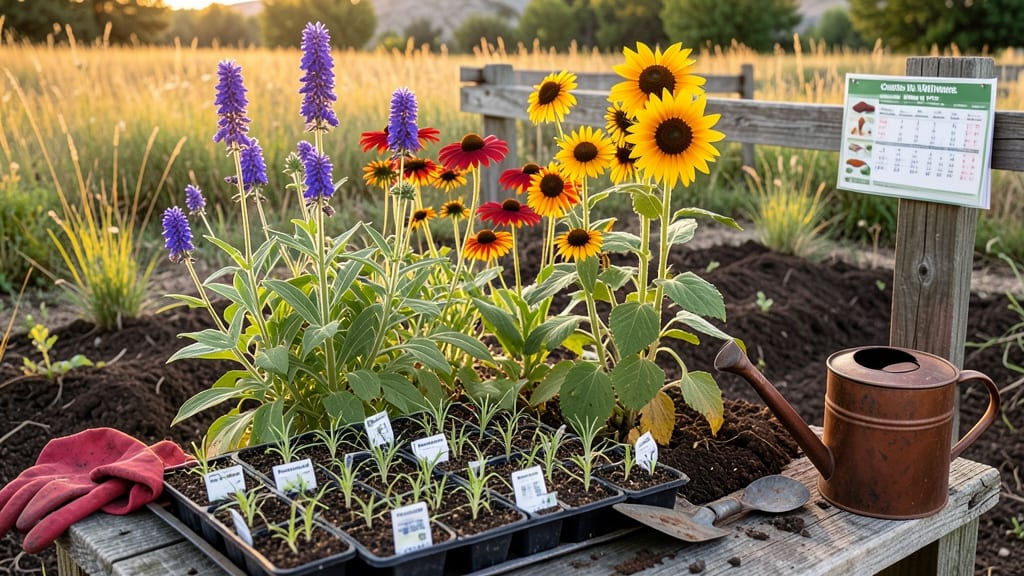
The best time to plant flowers in Colorado depends on your elevation zone and whether you’re sowing annuals, perennials, or bulbs—because a late frost can wipe out tender seedlings in a single night.
Picture this: You’ve spent weeks choosing vibrant 🌸 columbines or hardy lavender, only to watch them blacken under a surprise freeze. Colorado’s 5-7 USDA zones mean your Front Range neighbor’s planting schedule won’t match the Western Slope’s—so timing is everything.
In this guide, I’ll break down the exact months for each zone, from the arid plains to the high-country meadows, plus the 3 critical mistakes that kill blooms before they start.
You’ll leave here with a foolproof calendar, hardy flower picks, and soil prep tips to turn your garden into a year-round showstopper—no more guessing games.
Colorado flower planting calendar by elevation zone: exact months for annuals, perennials, and bulbs
Colorado’s three distinct elevation zones—Front Range, Foothills, and High Country—each demand unique planting strategies. The Front Range (5,000–7,000 ft) offers moderate climates, while the High Country (8,000+ ft) requires earlier starts to beat frost.
Understanding your zone’s last frost dates (April 15–May 15) and soil temperature thresholds (50°F for most flowers) is key to timing.
Annuals like marigolds and petunias thrive when planted 2–4 weeks after last frost, while perennials (e.g., coneflowers) can tolerate early spring planting. Bulbs, including tulips and daffodils, need fall planting (September–October) for spring blooms. Let’s break down the exact months for each zone.
| Zone & Elevation | Plant Type | Ideal Planting Months | Key Notes |
|---|---|---|---|
| Front Range (5,000–7,000 ft) | Annuals (e.g., Zinnias, Cosmos) | May–June | Wait until soil warms to 60°F+; mulch to retain moisture. |
| Front Range | Perennials (e.g., Lavender, Salvia) | March–April or Sept–Oct | Early spring or fall planting avoids summer drought stress. |
| Front Range | Bulbs (e.g., Tulips, Hyacinths) | September–October | Plant 6–8 weeks before first frost for spring blooms. |
| Foothills (6,000–8,000 ft) | Annuals (e.g., Sunflowers, Marigolds) | April–May | Soil warms slower; use black plastic mulch to speed up germination. |
| Foothills | Perennials (e.g., Columbine, Penstemon) | March–April | Native perennials tolerate cooler soils better than tropical varieties. |
| High Country (8,000+ ft) | Annuals (e.g., Sweet Peas, Nasturtiums) | May–June | Start seeds indoors in March; transplant after May 15. |
| High Country | Perennials (e.g., Alpine Lilies, Yarrow) | April–May | Use rock mulch to insulate roots from freeze-thaw cycles. |
| High Country | Bulbs (e.g., Gladiolus, Allium) | August–September | Plant earlier than Front Range to establish roots before winter. |
For the Front Range, where hardiness zones 5–7 dominate, most annual flowers can be sown directly after the last frost date (typically mid-May). Perennials like Russian sage benefit from early spring planting (March) to establish roots before summer heat. Bulbs must be in the ground by late September to avoid winter heaving.
In the Foothills, cooler nights delay planting by 2–4 weeks. Native wildflowers (e.g., Blanketflower) thrive when planted in April, while heat-loving annuals
Top 5 flowers that thrive in Colorado’s unique climate (with planting hacks)
Colorado’s dry air and variable elevations demand flowers that are tough, drought-resistant, and adaptable. I’ve handpicked five standout performers that burst into color while requiring minimal fuss—perfect for Front Range gardens, high-country meadows, or arid Western Slope landscapes.
These beauties handle thin soils, intense sun, and even late frosts like pros.
From the vibrant reds of penstemon to the fragrant lavender that hummingbirds adore, these flowers deliver year after year with almost no maintenance. The key? Planting them at the right depth, spacing them correctly, and giving them well-draining soil.
Let’s dive into my top picks and the planting hacks that guarantee success—no matter where you garden in Colorado.
🌱 Pro Tip: Always amend your soil with compost or sand (for clay-heavy areas) before planting. Colorado’s native soils are often alkaline and nutrient-poor, so a little prep goes a long way.
🌿 Colorado Planting Hacks You Can’t Miss
- 1. Plant perennials in early spring (April) or fall (September) to avoid summer heat stress.
- 2. Mulch heavily (2–3 inches) to lock in moisture and regulate soil temps—critical in Zone 5–7.
- 3. Space drought-tolerant plants (like lavender) 18–24 inches apart to prevent root competition.
- 4. Water deeply but infrequently—1–2 times per week in summer—to encourage deep root growth.
- 5. Deadhead spent blooms (except for seed heads like coneflowers) to prolong flowering and attract pollinators.
Let’s start with Columbine (Aquilegia), a Colorado native that thrives in partial shade and rocky soils. Plant seeds 1/4 inch deep in early spring or fall, spacing them 12–18 inches apart.
These frost-hardy beauties bloom from late spring to early summer and self-seed like crazy—often popping up where you least expect them. Their unique, spurred flowers are a magnet for hummingbirds and butterflies.
Next up is Penstemon (Beardtongue), the state flower of Colorado and a drought-proof superstar. Choose native varieties like Penstemon strictus (Rocky Mountain Penstemon) for full sun exposure.
Plant 18–24 inches apart in well-draining soil, and water deeply once established. These long-blooming perennials thrive in USDA Zones 4–8 and rebloom reliably with minimal care.
Lavender (Lavandula) isn’t just fragrant—it’s a workhorse in Colorado gardens. Opt for dwarf varieties like Lavandula angustifolia ‘Hidcote’ to keep it compact. Plant in full sun with sandy, gravelly soil (amend clay with perlite or sand), and space plants 2–3 feet apart. Prune after blooming to maintain shape and prevent woody growth. Bonus: Harvest stems for homemade sachets or culinary uses!
For bold, pollinator-friendly blooms, Coneflowers (Echinacea) are a must. The purple coneflower (Echinacea purpurea) is a perennial powerhouse that handles drought, poor soil, and even deer browsing.
Plant 18–24 inches apart in full sun to partial shade, and watch for cheerful pink-purple blooms from mid-summer to fall. Leave seed heads for winter interest and wildlife food.
Finally, Yarrow (Achillea) brings fiery color and long-lasting blooms to Colorado gardens. This drought-tolerant perennial thrives in full sun and well-draining soil. Plant 12–18 inches apart and shear back after flowering to encourage new growth.
Yarrow’s flat-topped clusters come in shades of yellow, red, and white, and they rarely need fertilizing—just occasional pruning.