
Flowers
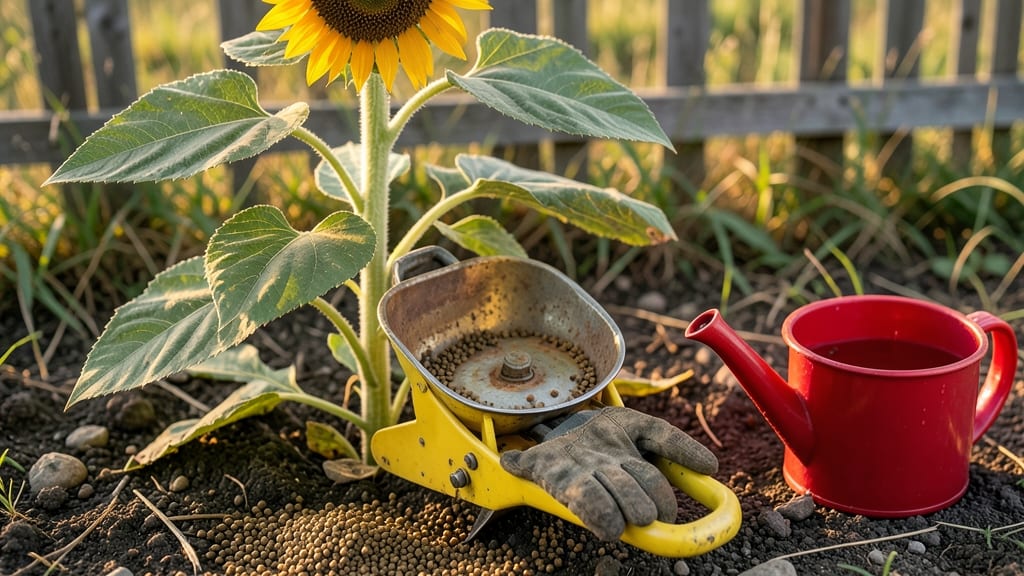
To fertilize sunflowers at the right time means giving them a strong start and a bloom-worthy finish—and missing that window can leave you with sad, stunted 🌻 stalks instead of towering giants.
Sunflowers are nature’s towering beauties—but without the right fertilization timing, their growth can stall before they reach their full, sun-drenched potential. Get this one step wrong, and you’ll miss out on those iconic golden blooms.
Most gardeners think feeding sunflowers means dumping fertilizer at planting, but the truth is, they need a two-phase approach: a light boost when they’re young and a stronger feed as they shoot up. The difference? A 6-foot stalk vs. one that barely clears your fence.
Here’s exactly when to fertilize—plus how to pick the right type for your zone and soil, so your sunflowers grow like they’re racing for the sky.
Optimal fertilization timing for sunflower growth stages (with soil pH guide)
Sunflowers thrive when fertilized at the right moments—too early or too late can leave you with weak stems or sparse blooms. The key is matching fertilization with their three distinct growth stages: seedling, vegetative, and flowering.
Each phase demands different nutrients, and timing your feedings ensures those towering golden heads reach their full potential.
Before diving into timing, let’s address the foundation: soil pH. Sunflowers prefer slightly acidic to neutral soil, with an ideal range of 6.0 to 7.0.
Test your soil first—if it’s outside this range, amend it with lime (to raise pH) or sulfur (to lower it) 4-6 weeks before planting. Healthy soil sets the stage for everything else.
| Growth Stage | Fertilization Timing | Fertilizer Type | Nutrient Focus | Soil pH Check |
|---|---|---|---|---|
| Seedling (0-4 weeks) | At planting + 2 weeks later | Starter fertilizer (5-10-10) or compost | Phosphorus (root growth) | 6.0-6.5 (slightly acidic) |
| Vegetative (4-8 weeks) | Every 4 weeks (May-June) | Balanced (10-10-10) or organic (fish emulsion) | Nitrogen + Potassium (stem strength) | 6.5-7.0 (neutral) |
| Flowering (8-12 weeks) | Once at bud stage (July) | Low-nitrogen (5-10-10) or bone meal | Phosphorus (bloom development) | 6.8-7.0 (slightly alkaline) |
At the seedling stage, focus on phosphorus to encourage strong root development. Apply a starter fertilizer (like 5-10-10) at planting and again when seedlings reach 2-3 inches tall. Organic options like compost or worm castings work well here, too. Avoid high-nitrogen fertilizers—they’ll produce lush foliage but delay flowering.
During the vegetative stage (when plants are 4-8 weeks old), switch to a balanced fertilizer like 10-10-10. This supports rapid stem growth and leaf expansion. Apply it every 4 weeks in early morning to prevent leaf burn. Organic choices like fish emulsion or kelp meal provide micronutrients for robust development.
When buds form (around 8-10 weeks), shift to a low-nitrogen fertilizer to redirect energy to blooms. A 5-10-10 blend or bone meal boosts phosphorus, which is critical for flower production. Skip fertilizing once blooms open—extra nutrients here can weaken stems and reduce seed quality.
For organic gardeners, compost tea or liquid fish emulsion applied every 3 weeks during vegetative growth works wonders.
Mix 1 tablespoon of compost into the soil at planting, then top-dress with compost again when buds appear. Synthetic fertilizers are faster-acting but require precise measurements—overdoing it leads to salt buildup and root damage.
Monitor your soil pH throughout the season. Seedlings prefer slightly acidic soil (6.0-6.5), while flowering plants thrive in neutral to slightly alkaline conditions (6.8-7.0). Use a soil test kit every 6 weeks to adjust pH as needed.
Lime raises pH, while elemental sulfur lowers it—both should be worked into the soil 2-3 weeks before fertilization.
In USDA Zones 3-7, fertilize sunflowers between May and July, aligning with their natural growth cycle. In warmer zones (8-10), extend fertilization to June-August. Always water deeply after applying fertilizer to help nutrients penetrate the root zone. Mulch with straw to retain moisture and regulate soil temperature.
Watch for signs of over-fertilization, like yellowing leaves or stunted growth. If this happens, flush the soil with water and reduce future applications by half. Sunflowers are forgiving, but precision in timing and type pays off with taller stems and bigger blooms.
With the right approach, you’ll enjoy sunflowers that reach their full, sun-drenched potential—just like nature intended.
Common fertilization mistakes that stunt sunflower growth (and how to fix them)
Even with full sun and well-draining soil, sunflowers can turn into weak, leggy plants if you fertilize at the wrong time or with the wrong mix. I’ve seen 6-foot stalks collapse under their own weight because of one simple mistake: overdoing nitrogen too early.
The biggest culprit? Over-fertilizing at planting. Sunflower seeds already pack enough energy to germinate—adding heavy fertilizer right away burns delicate roots and sends them scrambling for nutrients instead of establishing a strong root system.
Another red flag is using high-nitrogen fertilizer when your plants are already 2 feet tall. That leafy green growth looks healthy, but it steals energy from stem strength and flower development, leaving you with more foliage and fewer blooms.
⚠️ callout-warning
⚠️ When NOT to Fertilize Sunflowers
- At planting: Seeds contain enough nutrients for early growth.
- During drought: Fertilizer stresses roots when soil is dry.
- Late summer: Plants focus on seed production, not new growth.
✅ Best times: When plants are 6-12 inches tall and again at flower bud stage.
Yellowing leaves? That’s often a sign of phosphorus deficiency, which happens when you skip the second feeding during the budding phase. Sunflowers need phosphorus to develop strong roots and flowers, but many gardeners forget to switch from nitrogen-heavy feeds to a balanced 10-10-10 formula.
Fix it by side-dressing with a low-nitrogen, high-phosphorus fertilizer when you see buds forming. Scratch a spoonful into the soil near the base—this gives them a quick boost without overwhelming their system.
For weak stems, the issue might be potassium imbalance. Too much nitrogen and not enough potassium makes stems rubbery and prone to snapping. Mix in a handful of wood ash or use a 5-10-10 fertilizer to strengthen cell walls.
Remember: sunflowers are heavy feeders but only during their active growth phases. Once they start flowering, cut back on fertilizing entirely—let them focus on producing those golden blooms instead of new leaves.