
Plants
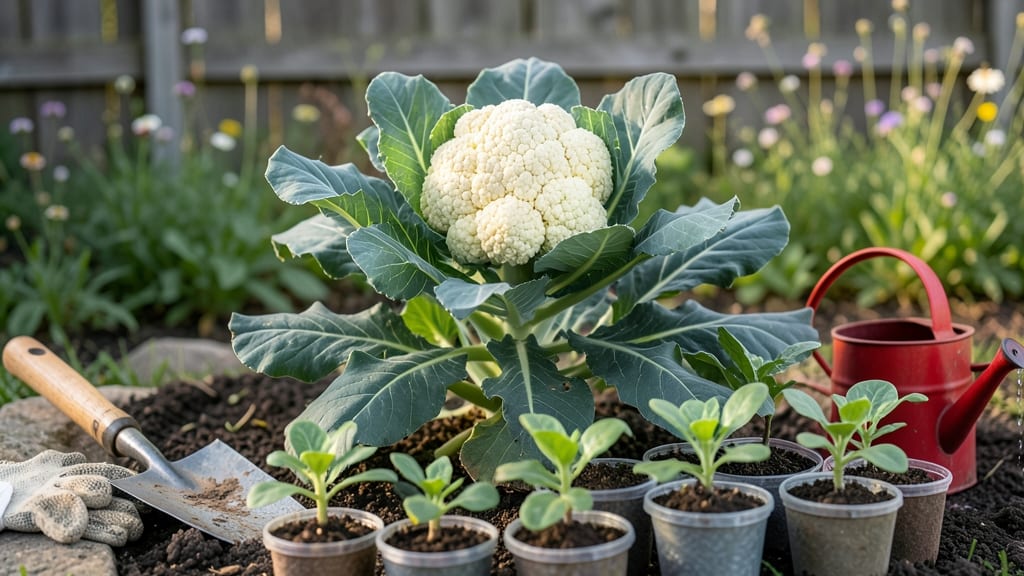
To plant cauliflower 🥬 in Michigan, time your spring transplanting for 4–6 weeks before the last frost—typically mid-March to early April—and your fall crop for July to avoid bolting.
Michigan gardeners know timing is everything—plant cauliflower too early, and you risk frost damage; too late, and your heads bolt before harvest. Mastering frost-date math ensures zero-bolt success and a bountiful fall harvest.
In USDA zones 5b–6b, cauliflower thrives with 6–8 hours of sun daily and cool soil, so focus on early spring or late summer starts. The key? Plant 4–6 weeks before the last frost for spring or 10–12 weeks before the first frost for fall.
Below, I’ll break down the exact frost-date math by region, the best varieties for Michigan’s short season, and how to avoid bolting—so you can enjoy crisp, homegrown heads from May to October.
Michigan cauliflower planting dates by region: frost-date math explained
Michigan’s diverse climate means cauliflower planting dates vary wildly from the Upper Peninsula to Southern Michigan. The key? Calculating your frost-free window and matching it to your chosen variety’s days to maturity.
Get this wrong, and you’ll either lose plants to frost or watch them bolt before harvest. Let’s break it down by region using USDA zones 5b-6b and historical frost data.
Start by identifying your last spring frost and first fall frost dates. For most of Michigan, the last frost typically falls between mid-April (Southern Michigan) and early May (Upper Peninsula). The first frost arrives mid-October in the south and early October in the north.
These dates are your planting anchors—plant too early, and frost will kill tender seedlings; too late, and your heads won’t mature before cold sets in.
Here’s the frost-date math I use: Subtract your variety’s days to maturity (e.g., 60–90 days) from your first frost date. For example, if your first frost is October 15 and your cauliflower takes 80 days to mature, you must transplant by July 26.
For spring crops, add 4–6 weeks before your last frost to give seedlings time to establish.
| Region | USDA Zone | Last Frost | First Frost | Spring Planting Window | Fall Planting Window |
|---|---|---|---|---|---|
| Southern Michigan (Detroit, Ann Arbor) | 6a-6b | April 15–May 1 | October 15–20 | March 20–April 15 (transplant) | July 15–August 10 |
| Northern Lower Peninsula (Traverse City, Grand Rapids) | 5b-6a | May 1–15 | October 1–10 | April 1–May 1 (transplant) | July 1–July 20 |
| Upper Peninsula (Marquette, Houghton) | 4b-5a | May 15–30 | September 20–October 1 | April 15–May 15 (transplant) | June 15–July 5 |
For Southern Michigan, aim to transplant cauliflower seedlings 4–6 weeks before your last frost (typically March 20–April 15). This gives plants time to establish before warm weather arrives. In the Northern Lower Peninsula, wait until April 1–May 1 to avoid late frosts.
The Upper Peninsula has the shortest window—transplant by May 15 for spring crops, or risk losing plants to late frosts.
Fall planting is trickier. Start seedlings indoors 8–10 weeks before your first frost and transplant July–August, depending on your region. In Southern Michigan, you can push it to August 10, but in the Upper Peninsula, stop by July 5 to ensure heads mature before frost.
Use fast-maturing varieties (60–70 days) like ‘Snowball Y Improved’ or ‘Purple of Sicily’ for fall crops.
Pro tip: Use row covers to extend your fall season by 2–3 weeks. These protect plants from light frosts (28°F) and can push your harvest into early November in Southern Michigan.
Just remove covers during the day to prevent overheating. In colder regions, prioritize cold-hardy varieties like ‘Avalanche’ or ‘Cheddar’.
If you’re unsure about your frost dates, check your local Michigan State University Extension frost maps or use a frost calculator like the one from the National Gardening Association. These tools pull data from your ZIP code and give precise dates.
For example, in Traverse City (Zone 5b), the average last frost is May 10, while in Battle Creek (Zone 6a), it’s April 20—a 3-week difference that matters for cauliflower.
Remember: Cauliflower hates heat. In Southern Michigan, avoid planting after May 15 for spring crops, as temperatures above 80°F cause bolting. For fall crops, start seedlings early enough to harvest before September heat waves stress the plants. If you’re in a hot microclimate, opt for shade cloth or drip
How to avoid bolting: temperature and light requirements for Michigan cauliflower
Cauliflower in Michigan thrives when you nail the temperature balance and sunlight exposure. Too much heat or insufficient light triggers bolting—when plants send up flower stalks instead of forming heads. For zero-bolt success, focus on day/night temperature thresholds and consistent light during critical growth stages.
Michigan’s USDA zones 5b-6b mean spring and fall crops face unique challenges. Spring plantings need protection from late frosts, while fall crops must avoid summer’s heat stress. The key is understanding how vernalization (cold treatment) and light intensity interact to prevent premature flowering.
⚠️ callout warning
Daytime temps above 80°F for 3+ days = immediate bolting risk.
Nighttime temps below 50°F after transplanting = stunted growth.
Less than 6 hours of sunlight = weak stems and poor head formation.
Solution: Use shade cloth (30-50%) in summer and row covers for spring protection.
Cauliflower requires 60-70°F daytime temps and 50-55°F nighttime temps for optimal growth. In Michigan, this means avoiding mid-July plantings when heat spikes. For fall crops, start seeds indoors 8-10 weeks before your first frost (typically mid-August for most regions) to ensure heads form before cold sets in.
Light is equally critical—6-8 hours of direct sunlight daily is non-negotiable. Michigan’s cloudy summers can trick plants into thinking it’s fall, accelerating bolting. Supplement with grow lights (14-16 hours/day) if natural light drops below 6 hours, especially for late-summer starts.
Soil prep plays a hidden role in bolting prevention. Amend beds with compost and aged manure to improve moisture retention and nutrient availability. pH between 6.0-7.0 prevents nutrient deficiencies that stress plants.
For fall crops, vernalize seedlings by exposing them to 40-50°F temps for 2-4 weeks before transplanting to mimic winter conditions.
Monitor your plants closely for early bolting signs: elongated stems, yellowing leaves, or flower stalks. If caught early, prune the flowering stalk and focus on cooling the soil with mulch. With these temperature and light strategies, you’ll harvest tight, white heads instead of bitter stalks—every time. 🌱