
Flowers
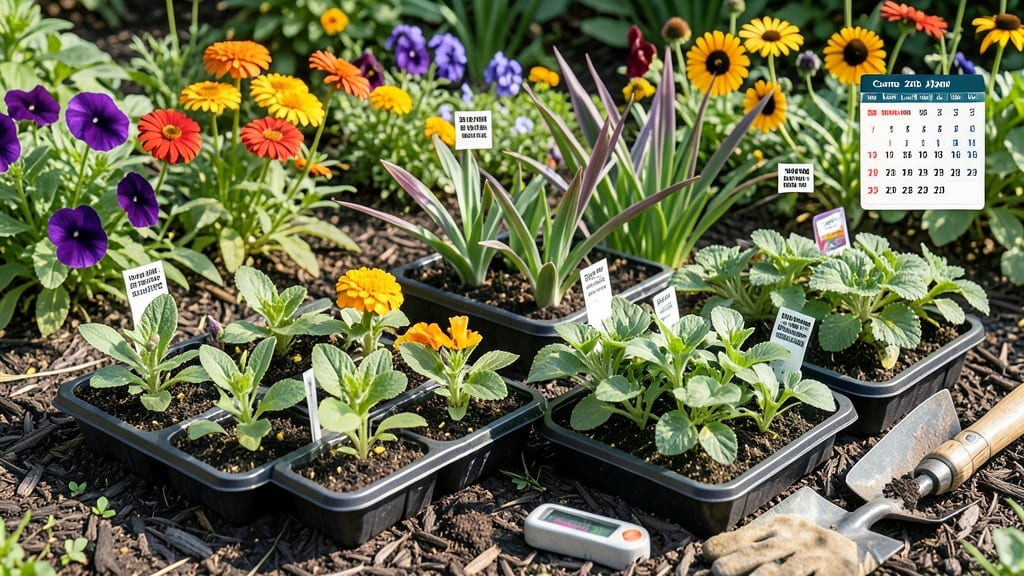
Planting flowers in Zone 6b at the right time means the difference between a garden that bursts with color and one that barely survives the first frost.
If you’ve ever watched your carefully chosen annuals wilt overnight or your perennials struggle to take root, you know timing is everything. Zone 6b’s unpredictable spring and fall can throw off even the most experienced gardeners, but there’s a science to getting it right.
In this guide, I’ll break down the exact months to plant annuals, perennials, and bulbs—plus how to adjust for early or late frosts—so you can enjoy blooms from spring through fall without the guesswork.
You’ll learn when to start seeds indoors, the ideal soil temperatures for direct planting, and how to stretch your growing season with simple tricks like row covers. Let’s get those 🌸 thriving!
Zone 6B planting calendar: exact months by flower type
In Zone 6B, where last frosts typically hit around April 15 and first frosts arrive by October 15, timing your plantings correctly ensures vibrant blooms all season.
The key is understanding when soil warms to 60°F+ for annuals and when perennials/bulbs need to establish roots before winter. Spring is for tender annuals, while fall offers a second chance for hardy perennials and bulbs.
My Zone 6B garden thrives when I follow these monthly milestones—each phase aligns with frost-free averages and soil temperatures for optimal germination. For example, marigolds and petunias need warm soil (May-June), while dahlias and black-eyed Susans can handle cooler spring soil (April-May).
Let’s break it down by flower type to avoid common pitfalls like frost damage or bolting.
| Month | Annuals | Perennials | Bulbs | Soil Temp |
|---|---|---|---|---|
| March | Start indoor seeds (e.g., snapdragons, pansies) | Divide perennials (e.g., daylilies, hostas) | Plant spring bulbs (e.g., tulips, daffodils) | 40–50°F |
| April | Transplant hardy annuals (e.g., sweet peas, lobelia) | Plant early perennials (e.g., columbine, lungwort) | N/A (spring bulbs blooming) | 50–60°F |
| May | Direct-sow warm-season annuals (e.g., marigolds, zinnias) | Plant sun-loving perennials (e.g., coneflowers, black-eyed Susans) | Plant summer bulbs (e.g., dahlias, gladiolas) | 60–70°F |
| June | Sow heat-tolerant annuals (e.g., sunflowers, cosmos) | Mulch established perennials to retain moisture | N/A (focus on care) | 70–80°F |
| September | Start fall annuals (e.g., pansies, snapdragons) indoors | Plant fall-blooming perennials (e.g., asters, sedum) | Plant fall bulbs (e.g., crocus, hyacinths) | 55–65°F |
| October | Transplant cool-season annuals (e.g., calendula, sweet alyssum) | Divide crowded perennials (e.g., peonies, iris) | N/A (bulbs dormant) | 50–60°F |
🌱 Pro Tip: Use a soil thermometer to confirm 60°F+ before planting warm-season flowers.
For annuals, the last frost date (April 15) signals the start of outdoor planting, but soil temperature is critical. For instance, tomato flowers (not in this guide, but relevant for gardeners) need 70°
How to adjust planting dates for early vs. late Zone 6B seasons
Zone 6B’s unpredictable spring frosts and early fall freezes can throw off even the most careful planting schedule. I’ve learned the hard way that a 3-week shift in frost dates means the difference between a lush garden and a sad, half-dead one.
The key? Flexibility with season extenders and heat-tolerant varieties.
For example, if your last frost date arrives three weeks earlier than average, you’ll need to adjust your spring planting by shifting annuals like marigolds and zinnias to mid-May instead of early April.
Similarly, a late fall frost might force you to pull up tender perennials like dahlias by mid-October instead of November.
Another trick I swear by? Successive planting in 2-week intervals. Instead of planting all your cosmos seeds at once, stagger them to ensure continuous blooms. This works especially well for late-season heatwaves—if the first batch struggles, later plantings may thrive.
For fall planting, focus on cold-hardy annuals like stock or snapdragons. These handle light frosts and often rebloom in spring. Pair them with perennial bulbs like crocus for early color. Always plant bulbs 6-8 weeks before the first frost—they need time to root before winter sets in.
Don’t forget to monitor weather forecasts and adjust on the fly. If a late-May frost is predicted, rush to cover tender perennials like beard tongues with burlap sacks. With these strategies, you’ll turn Zone 6B’s unpredictable seasons into your garden’s superpower. 🌿