
Plants
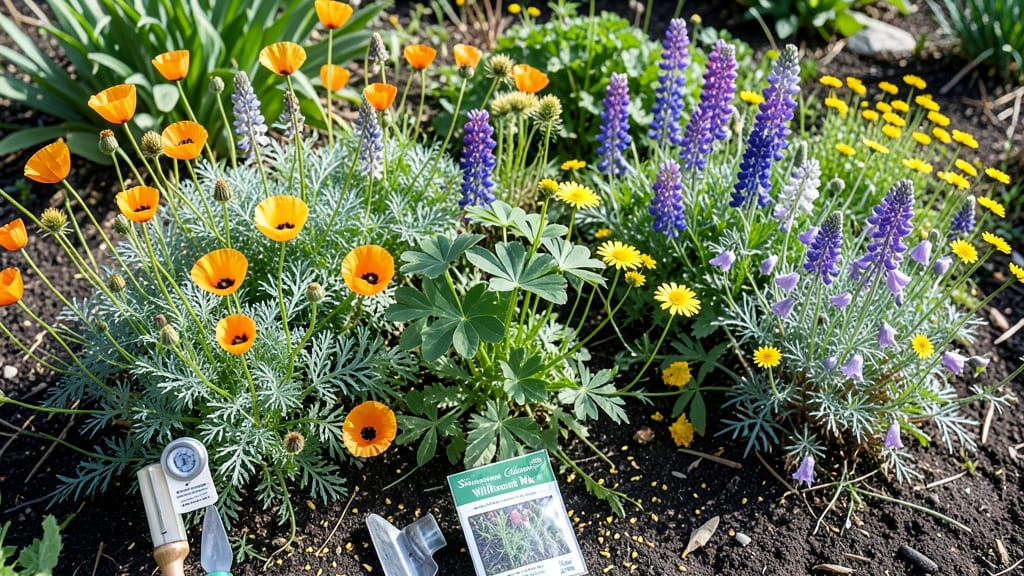
Planting wildflower seeds in Southern California during the fall or early spring unlocks vibrant blooms year-round 🌼—but timing matters more than you’d think.
Picture this: you scatter seeds in July, expecting a burst of color by spring, only to find sparse growth or weeds stealing the show. That’s because Southern California’s microclimates—coastal breezes, inland heat—demand precision.
Plant too early, and summer’s dry spell washes them away. Too late, and winter rains might do the same.
Whether you’re aiming for California poppies in October or lupines in February, the key is matching native species to your zone’s rainfall and soil. Coastal areas thrive with early fall plantings, while inland spots often wait for spring’s moisture.
Below, I’ll break down the best months, soil tricks, and drought-resistant picks to turn your patch into a pollinator paradise.
You’ll leave here knowing exactly when to sow for longer blooms, how to prep soil without over-tilling, and which wildflowers outperform non-natives in SoCal’s climate. No guesswork—just guaranteed color.
Best months to plant wildflower seeds for Southern California’s climate zones
Southern California’s diverse microclimates—from foggy coastal areas to hot inland valleys—create unique planting windows for wildflowers. Timing matters because some native seeds, like California poppies, need warm soil to germinate, while others, such as lupines, benefit from fall rains to break dormancy.
Getting it right means vibrant blooms from spring through summer.
Coastal regions (e.g., Malibu, Santa Barbara) enjoy milder winters and higher humidity, while inland areas (e.g., Los Angeles Basin, Riverside) experience hotter summers and less rainfall.
This means your planting strategy should shift based on where you live—fall is ideal for coastal zones, while early spring works best inland.
Native wildflowers like buckwheat and tidytips thrive when planted in October or November because cool, moist soil helps seeds establish roots before summer heat.
Meanwhile, non-native annuals like cosmos can handle spring planting (February–March) and still bloom by summer. Cold stratification isn’t always needed—many SoCal natives germinate naturally with rainfall or warm soil.
Here’s how to match your microclimate to the best planting months for year-round color:
For coastal gardens, focus on fall planting (October–December) when temperatures drop and rains arrive. This mimics natural conditions for California natives like lupines, which need moisture to germinate.
Inland areas should plant in February or March to avoid summer heat stress—buckwheat and blanketflower thrive with this timing.
Some seeds, like California poppies, don’t need cold stratification but benefit from warm soil (60°F+). Others, such as lupines, may germinate better after a light frost or moist winter. Always check seed packets for specific instructions, as some mixes include non-natives with different needs.
If you’re planting in summer (June–August), opt for heat-tolerant species like cosmos or zinnia and keep soil consistently moist until seeds sprout. Avoid planting in peak heat (July–early August) unless using shade cloth—seedlings can bolt or fail to establish.
Pro tip: Scatter seeds directly on soil—no need to bury them. Lightly rake or press them into the top ¼ inch to ensure soil contact. Water gently with a fine mist to avoid washing seeds away, especially on sloped or windy sites.
Mulch with straw or wood chips to retain moisture and suppress weeds.
Remember, native wildflowers are the lowest-maintenance choice for SoCal. They’ve evolved to thrive with minimal water once established and support local pollinators. For year-round blooms, mix fall-planted and spring-planted species—this creates a sequential bloom cycle that keeps your garden vibrant from winter to summer.
Start with small test patches if you’re unsure about timing. Even a 5-foot square can reveal which species thrive in your microclimate. With the right planting schedule, you’ll enjoy wildflower meadows that require almost no upkeep—just sun, soil, and occasional water.
How to prepare your soil and site for wildflower success
Southern California’s drought-resistant wildflowers thrive when you mimic their natural conditions—meaning minimal soil fuss and plenty of sunlight 🌞. The key to success lies in light soil prep, proper sunlight exposure, and smart watering.
Over-tilling or using synthetic fertilizers can actually harm these hardy plants, so we’ll focus on gentle, effective methods that encourage natural growth.
Start by choosing a sun-drenched spot with at least 6 hours of direct sunlight daily. Most native wildflowers, like California poppies and lupines, reject shade, so avoid areas under trees or tall structures.
If your site has partial shade, opt for shade-tolerant varieties like tidy tips or blue-eyed grass. Test your soil’s drainage by digging a 6-inch hole—if water pools after 10 minutes, amend with sand or gravel.
Soil amendments should be light and organic. Skip heavy compost or chemical fertilizers, which can burn delicate wildflower roots. Instead, mix in 1-2 inches of coarse sand or perlite to improve drainage, and top with ¼-inch of compost for nutrients. For clay-heavy soil, work in pebbles or crushed granite to break up compaction. Remember: wildflowers prefer lean, well-draining soil—think of it as a minimalist approach to gardening.
Now, let’s tackle the pre-planting checklist—this is where most gardeners go wrong. Avoid over-tilling, which disrupts soil structure and seeds’ natural germination cues. Instead, use a broadfork or rake to loosen the top 2-3 inches of soil.
Remove weeds and debris, then create a slightly rough surface to help seeds make contact with the earth. This step is critical for seed-to-soil adhesion, especially in windy SoCal conditions.
🌱 Your Wildflower Soil Prep Checklist
- Test sunlight: Mark your site’s sun exposure for a full day (use a sun gauge or app).
- Clear debris: Remove weeds, rocks, and old plant matter from a 12-inch-deep area.
- Loosen soil: Use a rake or broadfork to break up the top 2-3 inches—no deep tilling!
- Amend lightly: Mix in sand or perlite if soil is clay-heavy; add ¼-inch compost only.
- Rake surface: Create a rough texture with a stiff-bristle rake for seed contact.
- Avoid fertilizers: Skip synthetic nutrients—wildflowers thrive in low-nutrient soil.
- Water gently: Lightly mist the area 1-2 days before planting to settle the soil.
Watering is where many gardeners stumble, especially in Southern California’s drought-prone climate. Wildflowers hate soggy soil but need consistent moisture to germinate. Water deeply but infrequently: aim for ½ inch of water per week during dry spells, delivered in the early morning to reduce evaporation.
Use a soaker hose or drip irrigation to avoid disturbing seeds. Once established, most wildflowers need little to no supplemental water—their deep roots make them incredibly resilient.
Finally, consider mulching strategically. Skip thick layers of mulch, which can smother seeds. Instead, apply a thin layer of straw or wood chips (no more than ¼-inch thick) to retain moisture and suppress weeds.
This mimics the natural wildflower meadow environment and keeps your site looking tidy without sacrificing growth. With these steps, your soil and site will be wildflower-ready in just a few hours—no heavy lifting required!
Pro tip: If your soil is extremely sandy, mix in a 50/50 blend of sand and compost to retain just enough moisture for germination. And remember—patience is key.
Wildflowers often take 2-3 weeks to sprout, so resist the urge to overwater or disturb the soil during this critical phase.