
Flowers
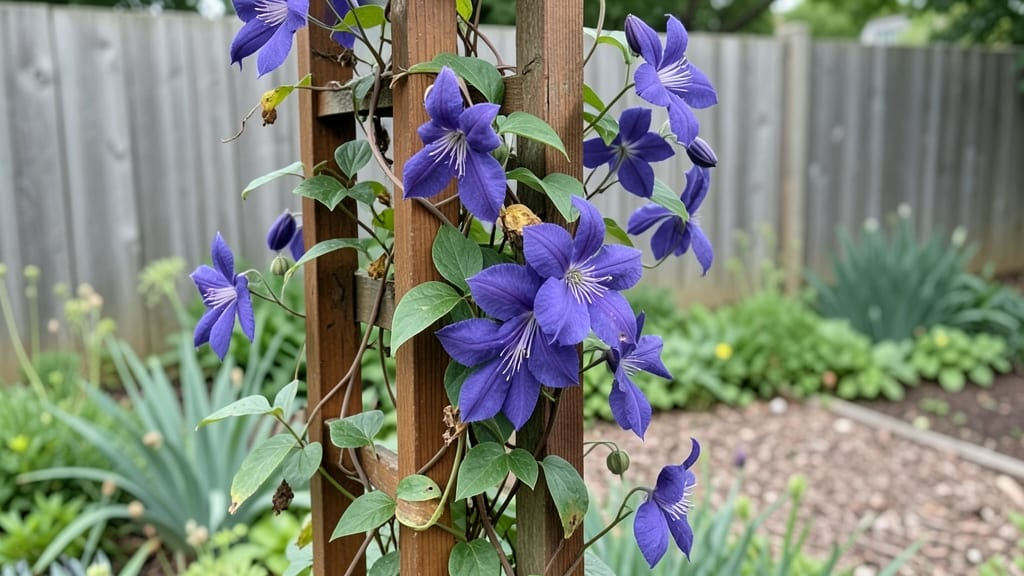
Growing a stunning blue flowered clematis 🌸 starts with the right care—because without it, even the hardiest varieties struggle to thrive.
If you're dreaming of a vibrant blue clematis vine that blooms prolifically from spring to frost, proper pruning and care are your secret weapons—yet most gardeners get these steps wrong, stunting their plant's potential.
This fast-growing vine needs full sun to partial shade, well-draining soil, and a sturdy support structure to climb. But the real magic happens in how you prune—cut back at the wrong time, and you'll miss out on those breathtaking blue blooms.
In this guide, I’ll walk you through pruning techniques, seasonal care, and the best blue clematis varieties for your zone—so you can enjoy a showstopping display year after year.
How to prune blue flowered clematis for maximum blooms
Pruning your blue flowered clematis isn't just about keeping it tidy—it's the key to unlocking year-round blooms in stunning shades of blue. Most gardeners make one critical mistake: pruning at the wrong time or cutting back too aggressively, which can leave your vine looking bare.
The secret lies in understanding your clematis' pruning group and following a seasonal schedule tailored to its growth habits.
Blue clematis varieties like 'Perle d'Azur' and 'Jackmanii' fall into three main pruning groups, each requiring a different approach. Group 1 blooms on previous year's wood, Group 2 blooms on both old and new growth, and Group 3 only blooms on current year's growth.
Knowing which group you have determines when and how much you prune to maximize those vibrant blue flowers.
Before you grab your shears, gather the right tools: bypass pruners for clean cuts, sterilized alcohol wipes to prevent disease spread, and a sharp knife for larger stems. Always prune on a dry, sunny day to reduce stress on the plant and allow wounds to heal quickly.
The goal is to encourage healthy new growth while preserving next year's blooms for Group 1 varieties.
Timing is everything—prune at the wrong time, and you'll sacrifice blooms. For Group 3 clematis (like 'Jackmanii'), prune back by 1/3 in early spring before new growth begins. Group 2 varieties need a two-step approach: prune spent flowers in late spring and again in early autumn.
Meanwhile, Group 1 clematis should only be pruned after flowering to avoid cutting off next year's blooms.
Step-by-Step Pruning Guide for Blue Flowered Clematis
- 1 Identify Your Clematis Group: Check your plant's label or research its variety to determine if it's Group 1, 2, or 3. This step is critical—pruning the wrong group can mean no blooms!
- 2 Clean Your Tools: Sterilize pruners with rubbing alcohol to prevent spreading diseases like clematis wilt. Sharp tools make cleaner cuts that heal faster.
- 3 Locate the Pruning Zone: For Group 3, cut back to 2-3 healthy buds above the last pair of leaves. For Group 2, prune spent flowers to the nearest strong bud in late spring.
- 4 Make Clean Cuts: Cut at a 45-degree angle just above a bud facing outward. Avoid leaving stubs, which can rot and invite pests. Use a sharp tool for precision.
- 5 Remove Weak Growth: Look for thin, leggy stems or those crossing the center of the plant. These compete for nutrients and reduce airflow. Aim to keep the strongest 6-8 stems for optimal blooming.
- 6 Apply Pruning Paste: Seal larger cuts with pruning sealant to prevent disease entry. This is especially important for Group 1 clematis, which blooms on old wood.
- 7 Fertilize After Pruning: Feed with a balanced fertilizer (10-10-10) to encourage new growth. Avoid high-nitrogen fertilizers, which promote foliage over flowers.
-
8
Essential care requirements for blue clematis varieties
Blue clematis varieties like Clematis 'Perle d'Azur' and Clematis 'Jackmanii' thrive with the right care, but their stunning blue blooms depend on precise growing conditions. Unlike many vines, these sun-loving plants need balanced moisture, fertile soil, and seasonal adjustments to reward you with vibrant flowers year-round.
I’ve grown these varieties for years, and I’ve learned that soil pH and watering consistency make the biggest difference in bloom intensity.
One of the biggest mistakes gardeners make is assuming all clematis varieties have identical needs. Blue clematis specifically require well-draining soil with a slightly acidic to neutral pH (6.0-7.0). They also need morning sunlight exposure to prevent leaf scorch while avoiding afternoon heat.
Let’s break down the exact conditions your blue clematis needs to flourish, from planting to winter dormancy.
Care Requirement Specification Sunlight Needs 6+ hours daily (morning sun preferred) Soil pH 6.0-7.0 (slightly acidic to neutral) Watering Schedule Deep soak 2-3x weekly (established plants) Fertilizer Type Balanced 5-10-10 (early spring) Winter Care Mulch base + protect crown (Zone 6a and below) Pruning Time Late winter (Group 1-2) or early spring (Group 3) Your blue clematis will reward you with longer blooming seasons if you adjust care based on the season. In spring (March-April), focus on root establishment with weekly deep watering and a slow-release fertilizer.
I’ve found that adding composted manure at planting boosts early growth, but avoid over-fertilizing—this can lead to leafy growth over blooms. During summer (June-August), reduce watering slightly but keep soil consistently moist—never soggy—to prevent root rot.
One trick I use is to water at the base rather than overhead, which keeps blue clematis blooms dry and reduces fungal diseases like powdery mildew. In fall (September-October), gradually reduce watering to prepare the plant for dormancy, and apply a 2-3 inch mulch layer to insulate roots.
For Zone 6a gardeners, I also wrap young plants in burlap during harsh winters to protect against freeze damage.
Don’t overlook the importance of support structures—blue clematis vines can reach 10-20 feet if given proper trellises or arbors. I recommend installing a 5-foot trellis the first year to guide growth and prevent tangling.
Pair this with a non-climbing companion plant like heuchera at the base to shade the roots and retain moisture. This combo has kept my Perle d'Azur blooming for 8+ weeks straight each season.
Finally, monitor your blue clematis for yellowing leaves or dropping buds, which often signal overwatering or nutrient deficiencies. A simple soil test every 2-3 years ensures you’re maintaining the ideal pH 6.0-7.0.
With these adjustments, your blue clematis will thrive and become the showstopper of your garden! 🌸