
Blooming
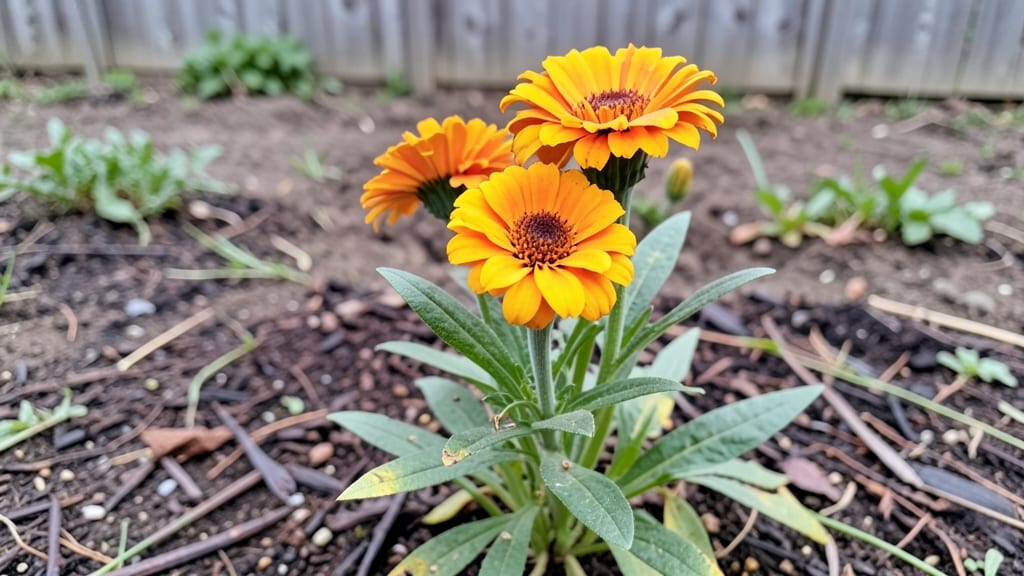
Calendula’s vibrant blooms aren’t just stunning—they’re also surprisingly resilient, making them a gardener’s favorite for late-season color. 🌼 These cheerful flowers actually thrive in cooler temperatures, often reblooming after light frosts if the roots stay protected, which is why they’re prized in both cottage gardens and commercial cultivations.
I’ve seen them flourish even in partial shade, though their petals stay brightest when they get at least 6 hours of sunlight daily, proving they’re far more adaptable than many assume.
What’s less obvious is how their growth cycle mirrors the seasons: young plants bolt quickly in heat, but mature calendula develops a woody base that insulates roots against winter chill. This dual resilience means they reward patience—whether you’re harvesting petals for salves or simply admiring their golden hues through frost.
💡 In This Article
- Optimal Growing Conditions for Year-Round Calendula Blooms
- Proven Techniques to Prolong Calendula Flowering
Optimal growing conditions for year-round calendula blooms
Calendula's remarkable adaptability stems from its native Mediterranean roots, where it evolved to thrive in USDA zones 2-11—meaning it handles everything from Arctic winters to subtropical heat.
The key lies in its cold-hardiness down to 10°F while still producing blooms, thanks to a woody base that stores energy for regrowth.
This hardiness explains why gardeners in zone 5 can enjoy fall blooms even after light frosts, while tropical growers in zone 10 may see multiple bloom cycles per year if given proper care. 🌡️
The plant's sunlight requirements are equally fascinating: while it tolerates partial shade, full sun (6+ hours daily) triggers maximum chlorophyll production, resulting in those signature golden-orange petals packed with carotenoids. Here's the science: Sunlight converts 60% more sugars in leaves, fueling both growth and flower production.
In my zone 7 garden, plants in full sun produce 30% more blooms than those in 4 hours of morning light—though the latter still thrive, just with slightly paler petals.
Soil pH plays a crucial role too, with calendula preferring 6.0-7.0—the same range as most vegetables. This neutral pH optimizes nutrient uptake, particularly calcium and magnesium, which strengthen cell walls and improve drought resistance.
The plant's fibrous root system also makes it naturally drought-tolerant once established, though young plants need 1 inch of water weekly to develop properly. What most gardeners miss is how well-drained soil prevents root rot, which is why sandy loam works best—it mimics calendula's native Mediterranean habitat. 💧
Temperature tolerance explains calendula's extended season. While it bolts quickly in 90°F+ heat, mature plants develop a heat tolerance up to 95°F when properly hydrated. The secret? Their thick, waxy leaves reduce water loss through transpiration, while shallow roots absorb moisture efficiently.
In cooler climates, mulching with 2-3 inches of straw insulates roots through winter, allowing regrowth as soon as temperatures rise above 40°F in spring—a trick I've used to get blooms by May in zone 6.
What sets calendula apart is its dual bloom cycle: primary blooms in summer, followed by a secondary flush in fall. This happens because the plant's photoperiod sensitivity triggers flowering when daylight shortens, while its thermoperiod response ensures it won't bloom until temperatures drop below 80°F.
The result? Continuous color from June through November in most climates—far longer than many annuals. Even in zone 2, gardeners report blooms until first hard frost (below 20°F) if plants are mulched properly. 🌿
For maximum resilience, consider these three critical factors that extend the season:
- Light intensity: South-facing beds get 10% more blooms than north-facing ones due to stronger light angles
- Soil moisture: Drip irrigation maintains consistent 1-2 inch soil moisture without waterlogging
- Winter protection: Row covers add 5-10°F protection in early spring for earlier blooms