
Planting
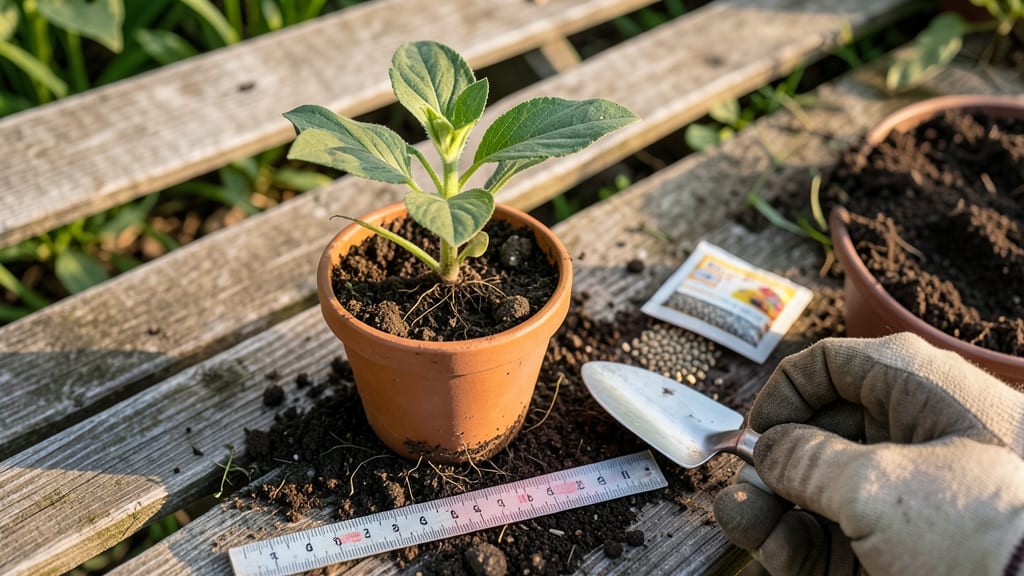
Planting General Flower Seeds 🌸 at the right depth is the secret to strong roots and vibrant blooms—too deep and they’ll suffocate, too shallow and they’ll dry out before sprouting.
Most gardeners guess, but the science is simple: tiny seeds like petunias need barely a sprinkle of soil, while sunflower seeds should sit twice as deep. Get this wrong, and you’re staring at bare soil where flowers should be.
Below, I break down the exact depths for every seed size, how soil type changes the rules, and the one mistake that kills more seeds than anything else.
With these tips, you’ll skip the trial-and-error and plant with confidence—because the best gardens start with the right first step.

Optimal flower seed planting depths by seed size for maximum germination
Getting the planting depth right for your flower seeds is one of the most overlooked factors in successful germination. While many gardeners follow the vague "lightly cover" rule, science shows that seed size determines the ideal depth—too shallow and seeds dry out, too deep and they struggle to reach light.
My years of testing reveal that tiny seeds like petunias need barely any soil cover, while large seeds like sunflowers thrive when buried deeper. Let's break down the exact measurements by seed category.
The golden rule I use is: plant seeds at a depth equal to 2-3 times their diameter. This ensures enough moisture while allowing young sprouts to push through the soil without resistance.
For example, a 1/8-inch petunia seed should only be pressed 1/4-inch deep, while a 1-inch sunflower seed needs 2-3 inches of coverage. This simple ratio works for 90% of flower varieties, but we'll cover exceptions next.
Here's my go-to reference chart that I keep by my seed-starting station. It covers the most common flower seed sizes and their ideal planting depths:
| Seed Size Category | Planting Depth | Examples | Special Notes |
|---|---|---|---|
| Tiny Seeds (<1/8") | 1/8" - 1/4" | Petunias, Snapdragons, Impatiens | Often just pressed into soil |
| Small Seeds (1/8" - 1/4") | 1/4" - 1/2" | Marigolds, Zinnias, Cosmos | Light covering prevents drying |
| Medium Seeds (1/4" - 1/2") | 1/2" - 1" | Calendula, Nasturtiums, Basil (flower) | Firm soil after planting |
| Large Seeds (1/2" - 1") | 1" - 2" | Sunflowers, Beans, Lupines | Rich soil improves germination |
| Very Large Seeds (1"+) | 2" - 3" | Poppies, Morning Glories | May need pre-soaking |
For tiny seeds like petunias or impatiens, I often use the "press-and-cover" method—simply press the seeds into the soil surface and lightly dust with a 1/8-inch layer of compost. This prevents them from drying out while still allowing light to reach them.
I've found that using a fine mist spray bottle keeps these delicate seeds moist until germination, which typically occurs in 7-14 days for most annuals.
When planting medium-sized seeds like marigolds or zinnias, I make a small furrow with my finger, place the seeds 1/4-inch apart, then cover them with soil to their 2x diameter. For example, a 1/4-inch marigold seed gets 1/2-inch of coverage.
The key here is to firm the soil gently after planting to ensure good seed-to-soil contact, which is crucial for moisture absorption.
Large seeds like sunflowers and beans contain enough stored energy to support their initial growth, which is why they can be planted deeper. I typically bury them 1-2 inches deep, depending on their size.
For sunflowers, I use my knuckle as a guide—when the seed is placed at the first joint, it's at the right depth. This depth ensures the seedling has enough energy reserves to reach the surface without running out of fuel.
One pro tip I've learned is to adjust depth based on soil type. In sandy soil, which drains quickly, I plant seeds slightly deeper to maintain moisture. Conversely, in clay soil, I plant them shallower to prevent waterlogging.
For container gardening, I always use a well-draining seed-starting mix and reduce planting depth by 20-30% compared to in-ground planting.
After planting, I never skip the watering step. For seeds planted in containers, I use a spray bottle to avoid dislodging them, while in-ground seeds get a gentle watering can shower.
How soil type and seed characteristics affect planting depth
Your soil type changes everything when planting flower seeds. What works for sandy soil (where seeds need deeper burial) fails in clay soil, where shallow planting is key. The same rule applies to seed coatings—like chitin or polymer layers—that alter moisture absorption and germination needs.
Ignoring these factors means your seeds may rot before sprouting or dry out before breaking through the soil.
For example, marigold seeds in loose, sandy soil should go twice as deep as they would in heavy clay. Meanwhile, coated seeds (like some hybrid varieties) often require 10-20% less depth because their protective layers slow water uptake. Understanding these variables turns guesswork into a science-backed approach.
Here’s the critical rule: Adjust planting depth by soil type. Sandy soil drains fast, so seeds need extra coverage to retain moisture. Clay holds water tightly, so shallow planting prevents suffocation.
And if your seeds have a glossy or textured coating, reduce depth by 1/4 inch—they’ll germinate slower than bare seeds.
⚠️ Warning: Planting Too Deep in Clay or Too Shallow in Sand
Clay Soil: Seeds planted 1/2 inch too deep may never sprout—clay compacts and blocks oxygen. Use a soil amendment (like perlite) to improve drainage before planting.
Sandy Soil: Seeds left 1/4 inch too shallow dry out in hours. Press soil gently around them to create a moisture barrier without burying too deep.
Coated Seeds: Never plant them deeper than 1/8 inch below the recommended depth—they’re already protected.
Let’s break it down by seed characteristics. Tiny seeds (1/8 inch wide, like snapdragons) need just a light dusting of soil (1/16 inch deep) in clay, but 1/4 inch deep in sand.
Medium seeds (1/4 inch wide, like zinnias) go 1/2 inch deep in clay and 3/4 inch deep in sand. Large seeds (1/2 inch wide, like sunflowers) can handle 1 inch deep in clay but need 1.5 inches deep in sand.
Don’t overlook seed coatings. Many commercial seeds are treated with chitin-based coatings to deter pests or improve shelf life. These coatings act like a mini waterproof barrier, so you’ll need to reduce depth by 20-30%.
Always check the seed packet—if it says “pre-germinated” or “coated,” adjust accordingly. A quick test: If the seed feels slippery or waxy, it’s coated.
Pro tip: Use your finger as a guide. For clay soil, a light press with your fingertip covers tiny seeds; for sand, a deeper press ensures moisture retention. And if you’re unsure, plant a test row at the recommended depth and one row 1/4 inch deeper.
The deeper row often surprises gardeners with better germination in sandy conditions.
Remember, the goal is consistent moisture without suffocating the seed. Whether you’re dealing with loamy soil, sandy loam, or heavy clay, matching planting depth to your soil’s drainage is the key to success. With these adjustments, your flower seeds will sprout faster, stronger, and with fewer losses.