
Flowers
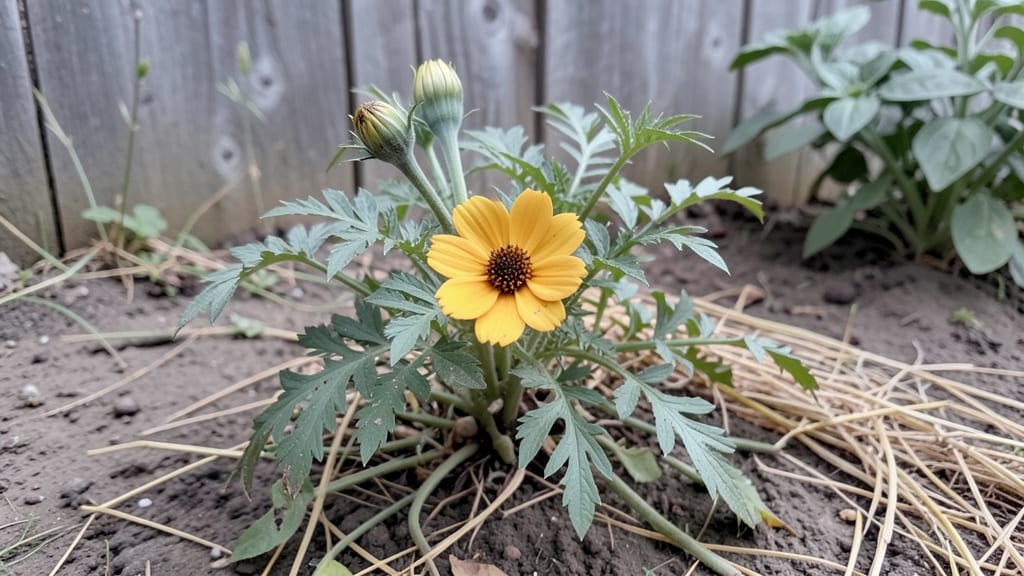
A plant with yellow flowers could be a black-eyed Susan, marigold, or coreopsis, each offering vibrant blooms and varying care needs. Identify them by leaf shape, bloom structure, and growth habits for accurate recognition.
Yellow flower plants often stand out as garden staples, but their unique traits can help you tell them apart. 🌼 For instance, black-eyed Susans boast dark centers and daisy-like petals, while marigolds feature layered petals with a spicy aroma.
Coreopsis, on the other hand, has slender petals and thrives in drier conditions, making it a low-maintenance choice for sunny spots.
Beyond their visual appeal, these plants also differ in growth habits—some spread aggressively like creeping Jenny, while others stay compact like dwarf sunflowers. Understanding these distinctions helps you select the perfect variety for your garden's style and climate needs.
💡 In This Article
- Botanical Features of Popular Yellow Flower Plants
- Growing Conditions for Thriving Yellow Flower Plants
Botanical features of popular yellow flower plants
Yellow-flowering plants showcase remarkable diversity in their botanical structures, with each species developing unique adaptations for survival and reproduction.
The petal arrangement alone can distinguish them: daffodils (Narcissus) feature six petal-like tepals surrounding a central corona cup, while sunflowers (Helianthus) display composite flower heads with hundreds of tiny ray florets radiating from a dark central disk.
Buttercups (Ranunculus) have five delicate, rounded petals with a glossy texture that reflects sunlight, creating their signature luminous appearance.
The leaf morphology provides another key identifier. Sunflower leaves are coarse, deeply veined, and grow alternately along sturdy stems, reaching lengths of 6-12 inches with serrated edges.
In contrast, buttercup leaves are finely divided into three lobed sections (trifoliate), resembling tiny maple leaves, while daffodil foliage appears sword-shaped and grows in clusters from the base. These variations reflect evolutionary adaptations—sunflowers maximize photosynthesis with broad leaves, while buttercups prioritize ground coverage through their lobed structure.
Root systems reveal even more about these plants' ecological strategies. Sunflowers develop taproots that can penetrate 6 feet deep, anchoring them against strong winds and accessing moisture from lower soil layers. Daffodils grow bulbous roots that store nutrients underground, allowing them to bloom early in spring before other plants emerge.
Buttercups, however, spread through rhizomatous networks, creating dense colonies that outcompete weeds—a trait that makes them both ecologically dominant and garden nuisances.
What most gardeners overlook is how these features correlate with pollination strategies. Sunflowers attract bees and birds with their high nectar production and dense flower heads, while buttercups rely on wind and insects to transfer pollen between their five-petaled blooms.
Daffodils have evolved a clever defense mechanism: their corona cups trap nectar, forcing pollinators to brush against reproductive structures as they feed. These adaptations explain why some yellow flowers thrive in open meadows while others dominate woodland edges.
Consider the sensory differences too. Sunflower petals feel slightly rough to the touch due to their papillate (hairy) texture, while buttercup petals are nearly smooth and cool to the palm—a trait that helps dissipate heat in sunny conditions.
The aroma varies dramatically: marigolds emit a spicy, citrusy scent from their terpenes, while daffodils release a faint, sweet fragrance from their volatile oils. These sensory distinctions aren't just for show; they're evolutionary tools that attract specific pollinators and deter herbivores.
For practical identification, focus on these three diagnostic combinations: sunflowers (large composite heads + coarse leaves), buttercups (five-petaled flowers + lobed leaves), and daffodils (cup-shaped corona + sword-like foliage).
The key is examining all three elements—petals, leaves, and growth pattern—rather than relying on color alone, since many yellow flowers share similar hues but differ dramatically in structure. 🌼