
Pruning
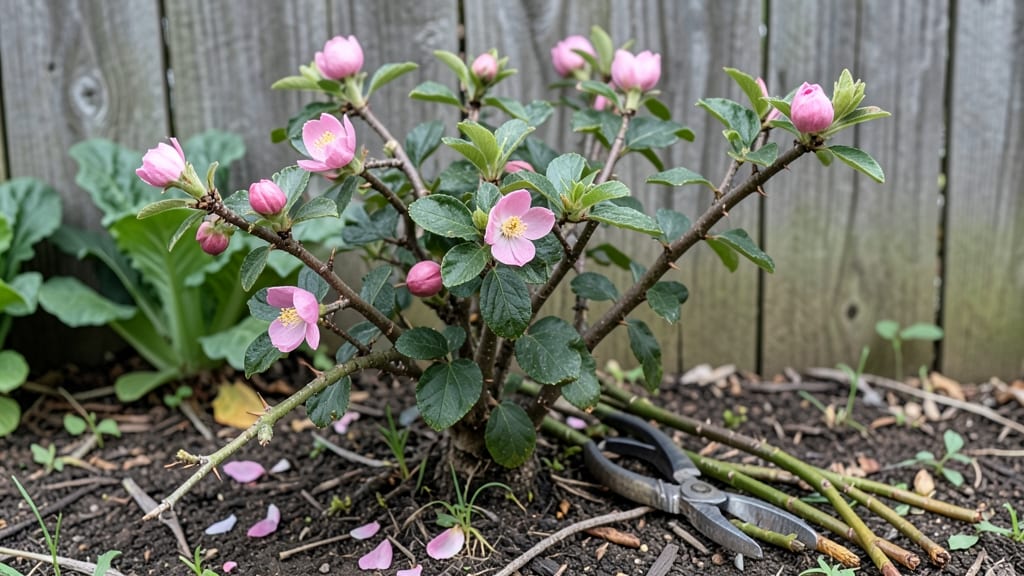
Pruning flowering quince transforms your shrub from a tangled mess into a vibrant, year-round bloomer—something I learned the hard way after my first overgrown specimen nearly collapsed under its own weight. The key lies in timing, technique, and a little patience, not brute force.
Most gardeners wait until spring, but the real secret is a two-step approach that keeps flowers coming winter and summer.
You’ll need sharp pruners, gloves, and a clear day—no need for fancy tools, just clean cuts and a plan. Start by removing dead or crossing branches first, then shape the shrub to open its center.
Flowering quince blooms on old wood, so avoid heavy cuts that strip next year’s flowers. Think of it as sculpting, not hacking: every snip should improve airflow and sunlight access.
After pruning, your quince should look lighter and more balanced, with fresh green growth emerging within weeks. The blooms will arrive earlier in spring and linger into fall, often even through winter in mild climates. Just avoid fertilizing right after—let the plant recover before feeding it.
This technique works for all flowering quince varieties, whether you’ve got a mature shrub or a young plant. The payoff? A neat, productive shrub that rewards you with bold blooms for decades. Ready to give it a try?
📚 In This Guide
- What you need
- Instructions
- Tips and common mistakes
- Wrapping up and next steps
What you need
- ● Pruning shears: Bypass pruners (sharp, clean, and capable of cutting up to ½-inch thick branches). 2-3 pairs recommended for efficiency.
- ● Loppers: For thicker branches (½-inch to 1½-inch diameter). 1 pair with a bypass blade is ideal.
- ● Hand saw: For stubborn, thick branches (over 1½ inches). A pruning saw with a curved blade works best.
- ● Disinfectant: Rubbing alcohol (70% isopropyl) or a commercial pruning sealant to sterilize tools between cuts.
- ● Garden gloves: Heavy-duty, cut-resistant gloves to protect hands from thorns and sharp branches.
- ○ Pruning sealant (optional): Tree wound paint (like Tanglefoot Tree Wound Pruning Seal) to prevent disease entry on larger cuts.
- ● Extension pole: For reaching high branches safely.
- ● Twine or zip ties: To secure branches during heavy pruning.
- ● Trash bags or bucket: For collecting pruned branches and debris.
- ● Sharpener: A file or honing stone to keep blades razor-sharp.
- ● Safety glasses: To protect eyes from flying debris.
Instructions for pruning flowering quince to encourage continuous blooms
Here’s the straightforward approach I’ve used to keep flowering quince producing vibrant blooms year after year.
Identify the Right Time for Pruning
Flowering quince blooms on old wood, meaning the flowers form on last year’s growth. The best time to prune is late winter to early spring, just as new growth begins but before buds swell. This timing ensures you don’t accidentally cut off next year’s flowers. If you prune too early, you risk removing dormant flower buds; if you wait too long, you’ll encourage leggy growth.
Look for swollen buds along the stems—these are your signal to hold off. In colder climates, prune after the last frost but before the tree breaks dormancy. In milder regions, aim for February to March. Avoid pruning in fall, as this can stimulate new growth that won’t harden off before winter.
Remove Dead, Diseased, or Crossing Branches
Start by inspecting the tree for branches that are dead, diseased, or rubbing against each other. Dead branches are easy to spot—they’re brittle, lack bark, and may have no leaves even when the tree is in full leaf. Diseased branches often show discoloration, oozing sap, or unusual growths like cankers. Use sterilized pruning shears to cut these out at the branch collar, the swollen area where the branch meets the trunk.
Crossing branches compete for sunlight and air circulation, which weakens the tree and invites pests. Remove one of the crossing branches, cutting back to the point where it branches off from another stem. Make clean cuts at a 45-degree angle just outside the branch collar. Avoid leaving stubs, as they can rot and invite disease.
Thin Out Overcrowded Areas
Flowering quince can become dense, which reduces airflow and light penetration. Your goal is to create an open structure that allows sunlight to reach the inner branches. Focus on removing branches that grow inward or upward, as these shade out the center of the tree. Start at the outer canopy and work your way in, cutting back to a healthy lateral branch or bud.
Leave 3-4 main branches as your framework, ensuring they’re evenly spaced around the tree. Thin out any branches that are growing too close together—aim for 6-8 inches of space between branches. This spacing encourages stronger growth and better flower production. If a branch is too small to support itself, it’s better to remove it now than risk it breaking later.
Shape the Tree for Balance and Airflow
Step back and assess the tree’s overall shape. Flowering quince responds well to light shaping, so aim for a rounded, open form that allows sunlight to reach all branches. Start by removing any branches that grow directly downward or are too long and leggy. These branches often produce fewer flowers and can become weak over time.
Cut back overlong branches by one-third to one-half their length, pruning just above a outward-facing bud or lateral branch. This encourages bushier growth and more flower production. Avoid heavy pruning—never remove more than 25% of the tree’s canopy in one session. Heavy pruning can stress the tree and reduce flowering.
Clean Up and Monitor Growth
After pruning, collect and dispose of all cuttings in a sealed bag to prevent the spread of disease. Sterilize your pruning tools with rubbing alcohol or a 10% bleach solution to kill any lingering pathogens. Once the tree is pruned, water it deeply to help it recover, especially if the weather is dry or hot.
Monitor the tree over the next few weeks for new growth. You should see new shoots emerging from the buds you left behind. If growth is slow, consider applying a balanced 10-10-10 fertilizer in early spring to encourage vigorous regrowth. Avoid fertilizing immediately after pruning, as this can stress the tree further.
Tips & tricks for pruning flowering quince
These precise techniques will help you maintain your flowering quince's health while maximizing its stunning blooms throughout the year.
Timing is Everything: The late winter to early spring window is critical because flowering quince blooms on old wood. I always check for swollen buds as my signal to stop pruning—this ensures we preserve next year's flowers. In colder zones, wait until after the last frost, while milder climates can start as early as February. Between us, I've learned the hard way that fall pruning stimulates tender new growth that won't survive winter.
Precision Cutting Technique: When removing branches in Step 2, make your cuts just outside the branch collar at a 45-degree angle using sterilized shears. The branch collar is that swollen area where the branch meets the trunk—it's your guide for clean, healthy cuts. I've found that leaving stubs creates entry points for disease, so always cut back to the collar. For crossing branches, remove the weaker of the two to maintain the tree's natural balance.
Structural Balance Matters: Aim for that open, rounded shape when thinning in Step 3 and shaping in Step 4. Leave 6-8 inches between branches to ensure proper airflow and sunlight penetration. I typically maintain 3-4 main scaffold branches as my framework—this creates the perfect structure for continuous blooming. Remember, you're sculpting the tree's future growth pattern, so take your time with each cut.
Post-Pruning Care: After completing all cuts, don't forget the cleanup steps. I always sterilize my tools with rubbing alcohol between cuts to prevent disease spread, and I dispose of all cuttings in sealed bags. The deep watering afterward helps the tree recover, especially in dry conditions. Monitoring for new shoots in the weeks following pruning lets you know you've left enough healthy buds to support next season's flowers.
Pro Tips for Prune Flowering Quince
- These precise techniques will help you maintain your flowering quince's health while maximizing its stunning blooms throughout the year.
- Timing is Everything: The late winter to early spring window is critical because flowering quince blooms on old wood.
- Precision Cutting Technique: When removing branches in Step 2, make your cuts just outside the branch collar at a 45-degree angle using sterilized shears.
Frequently asked questions
Got questions about pruning your flowering quince? You’re not alone! Here are some common queries—and answers—to help you keep your plant thriving with those gorgeous blooms.
Best timing?
Late winter or early spring—right before new growth starts—is ideal. This gives your quince time to recover before summer heat. Avoid pruning in fall, as new growth may not harden off before winter. If you notice dead or diseased branches year-round, trim those immediately!
How Often Should I Prune My Flowering Quince?
Annual light pruning keeps your quince healthy and blooming. Focus on shaping, removing old wood, and thinning crowded branches. Heavy pruning every 2–3 years is fine if needed, but don’t overdo it—flowering quince blooms on old wood, so preserve those sturdy branches!
No blooms?
Check these fixes:
- Age: Flowering quince often blooms best in years 3–5. Be patient!
- Sunlight: Ensure it gets full sun (6+ hours daily).
- Fertilizer: Use a balanced, low-nitrogen fertilizer in spring.
- Deadheading: Remove spent blooms to encourage more flowers.
Summer pruning?
Only do it for emergency fixes—like removing suckers or diseased branches. Avoid heavy cuts, as summer pruning can stress the plant and reduce winter hardiness. If you must prune, water deeply afterward and avoid extreme heat.
What Tools Work Best for Pruning Quince?
Tool tips:
- Use clean, sharp bypass pruners for small branches.
- For thicker branches, grab a hand saw or loppers.
- Disinfect tools with rubbing alcohol between cuts to prevent disease.
- A pair of gloves protects your hands from thorns!
Wrapping up and next steps
Pruning your flowering quince doesn’t have to be intimidating—with the right timing, tools, and technique, you can keep those fragrant blooms coming year after year! 🌸 By following the steps outlined here, you’ll encourage healthier growth, prevent overcrowding, and enjoy stunning flowers well into autumn.
Ready to transform your garden? Grab your pruners and get started today! For extra confidence, watch a quick video tutorial or join a local gardening group to share tips with fellow enthusiasts.
Pro tip: Mark your calendar for next year’s pruning schedule—consistency is key to long-term success!