
Planting
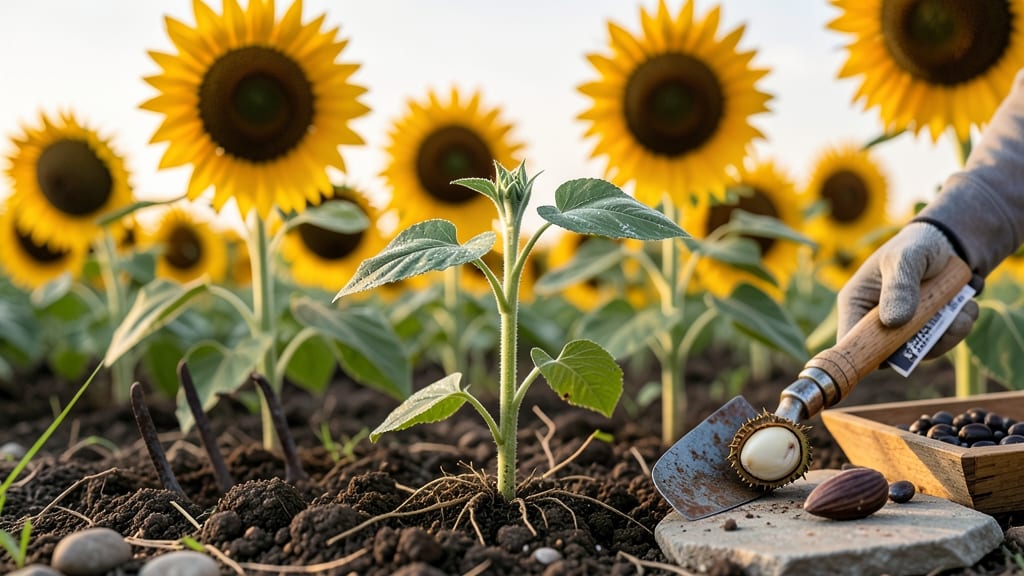
Planting sunflower seeds the right way up is the key to avoiding stunted growth or no sprouts at all — and there’s a simple trick to get it right every time.
Struggling to grow sunflowers because you keep planting seeds the wrong way up? You’re not alone—this common mistake can kill your plants before they even sprout. The good news? There’s a quick trick to tell the top from the bottom, ensuring your sunflowers grow tall and strong from day one.
Sunflower seeds have a pointed end and a slightly rounded bottom. Plant the pointed end down, about 1 inch deep in well-drained soil, and you’ll see sprouts in 7-14 days. Flip it, and you might as well toss it—the seed won’t germinate.
Below, I’ll show you how to spot the right orientation, common planting mistakes to avoid, and the best soil conditions for fast growth. Ready to grow those towering 🌻?

How to tell which way up to plant sunflower seeds (simple trick)
Planting sunflower seeds the wrong way up can leave you staring at empty soil, wondering where your towering giants went. The good news? Sunflower seeds have a clear visual clue that makes this mistake easy to avoid.
I’ve planted thousands of sunflowers, and this simple trick has saved me from wasted seeds and disappointed kids every growing season.
Sunflower seeds aren’t symmetrical like peas or beans—they have a distinct pointed end that should always face downward when planted. This isn’t just a quirk of nature; it’s how the seed’s radicle (root) emerges first, followed by the shoot. Planting them upside-down can stunt growth or prevent germination entirely.
If you’re still unsure, try this trick: Hold the seed between your thumb and forefinger with the pointed end facing you. The rounder side should naturally feel like it belongs on top—just like how a lightbulb’s base fits into a socket.
This mental image sticks with me every planting season!
Proper orientation isn’t just about avoiding frustration—it’s about maximizing germination rates. When planted correctly, sunflower seeds can sprout in as few as 7-10 days under ideal conditions. I’ve seen seeds planted upside-down take twice as long or fail entirely, especially in cooler soils.
Another pro tip: If you’re planting multiple seeds, lay them on a dark-colored surface (like a piece of black paper) first. The pointed ends will all face the same direction, making it easier to plant them uniformly.
This works especially well for large batches or when teaching kids to garden!
Once you’ve mastered the point-down rule, pay attention to the soil temperature. Sunflower seeds germinate best in soil that’s at least 55°F (13°C). If your spring is still chilly, consider using black plastic mulch to warm the soil faster.
I’ve planted seeds in April with this method and seen sprouts within a week!
Remember, even if you mix up a few seeds, sunflowers are forgiving. They’ll often right themselves if given enough warmth and moisture. But why risk it when a simple visual check can guarantee your seeds grow into those majestic 10-foot giants you’ve been dreaming of? 🌻
Common mistakes when planting sunflower seeds (and how to fix them)
Even experienced gardeners sometimes struggle with sunflower seeds—especially when it comes to planting them the right way. One of the most overlooked mistakes is planting seeds too deep, which can suffocate young sprouts before they break through the soil.
Sunflower seeds need just the right balance of depth and exposure to light for successful germination.
Another frequent error is confusing the seed orientation. Many gardeners assume sunflower seeds are planted like beans, but their unique shape and structure require a different approach. Planting them upside down can delay sprouting or even prevent germination altogether. Let’s fix these common mistakes with simple, actionable steps.
⚠️ How to Plant Sunflower Seeds the Right Way Up
Sunflower seeds have a pointed end (the radicle) and a rounded base. Always plant them with the pointed end down—this is where the root will emerge. The rounded end should face upward, as this is where the shoot will push through the soil. If unsure, look for a small dent or crease on the rounded side; this marks the future sprout location.
Planting sunflower seeds too deep is another common mistake. While 1 inch deep is ideal for most soil types, some gardeners bury them too far, especially in heavy clay. This can lead to poor germination because the seed struggles to reach the surface.
If your soil is dense, adjust the depth to ½ inch to help the sprout break through more easily.
Overwatering is a sneaky mistake that can drown sunflower seeds before they germinate. While keeping the soil moist is important, soggy conditions can cause seeds to rot. Water gently after planting, ensuring the soil stays damp but not waterlogged.
A good rule of thumb is to water when the top 1 inch of soil feels dry to the touch.
Ignoring soil conditions is another pitfall. Sunflowers thrive in well-draining, slightly acidic soil (pH 6.0-7.0). If your soil is compacted or lacks nutrients, amend it with compost or organic matter before planting. Poor soil quality can stunt growth or lead to weak stems that struggle to support the plant’s height.
Finally, spacing seeds too closely can lead to competition for nutrients and sunlight, resulting in smaller, weaker plants. Give each seed at least 6 inches of space between plants and 18-24 inches between rows.
Proper spacing ensures each sunflower has room to grow tall and strong without crowding its neighbors.