
Plants
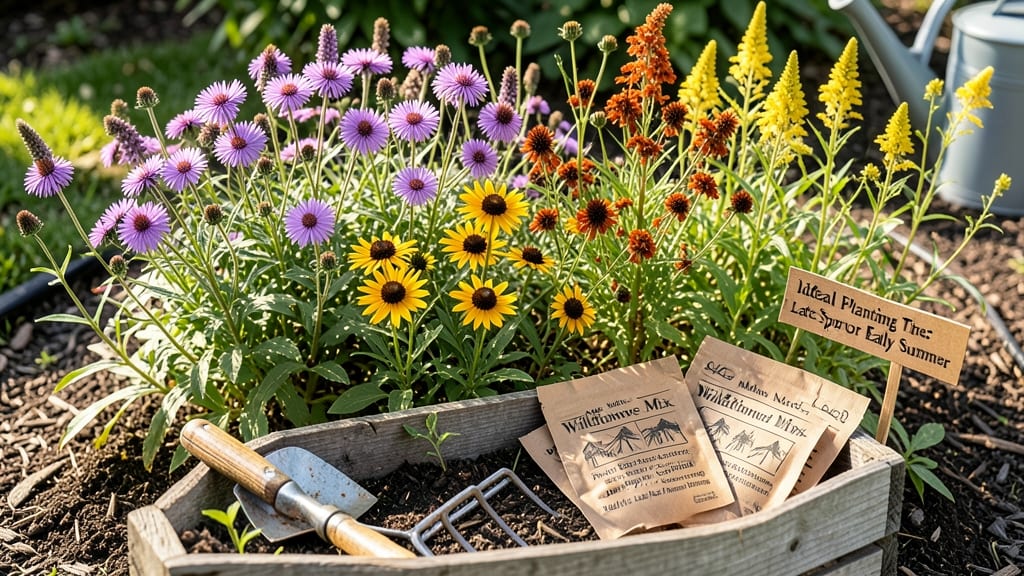
Plant wildflower seeds in Maine between late August and early September for fall blooms or in April to May for spring color—timing this right is the difference between a lush meadow and a missed opportunity.
Timing is everything when planting wildflower seeds in Maine—get it wrong, and your meadow could end up as a patchy disappointment instead of a vibrant, pollinator-friendly paradise. With Maine’s unpredictable frost dates and diverse microclimates, knowing the exact window for planting in Zones 5 and 6A is key to success.
Fall planting gives seeds time to establish roots before winter, while spring sowing ensures they catch the growing season’s momentum. Coastal areas like Portland may have slightly later frost dates than inland spots, so adjust based on your local climate.
Below, I’ll break down the ideal planting windows, soil prep tips, and how to choose the best wildflower mixes for Maine’s short but sweet growing season—so you can turn your patch of earth into a buzzing haven for bees and butterflies.
Maine’s frost-free planting deadlines by Zone 5 & 6A (with exact dates)
Maine’s Zone 5 and Zone 6A regions have distinct frost-free planting windows that can make or break your wildflower meadow. In Zone 5, the last frost typically arrives between May 10-20, while Zone 6A sees frost-free conditions slightly earlier, around May 1-10.
These dates shift coastal areas (like Portland) 1-2 weeks later than inland spots (like Bangor) due to ocean moderation.
For wildflower seeds, soil temperature is just as critical as air temperature. Seeds need at least 50°F soil warmth to germinate consistently. In Maine, this usually aligns with late April to early May for spring planting, but cooler coastal soils may delay germination by 7-10 days.
Fall planting offers a longer window—August through mid-September—when seeds can establish roots before winter.
Here’s the key difference: Zone 6A gardeners have a 2-week earlier window for spring planting than Zone 5 growers. This matters because wildflowers like black-eyed Susan and purple coneflower need consistent moisture during germination.
Plant too early, and frost will kill tender sprouts; too late, and summer heat stresses young plants.
🌱
| 🌸 Maine Wildflower Planting Deadlines 🌼 | |||
|---|---|---|---|
| Planting Window | Zone 5 Deadline | Zone 6A Deadline | Key Consideration |
| Spring Planting | May 10-20 | May 1-10 | Wait until soil reaches 50°F+; coastal areas lag 7-10 days |
| Fall Planting | August 15-September 15 | August 1-September 10 | Seeds need 4-6 weeks to germinate before first frost |
| Soil Prep Time | April 15-May 5 | April 1-May 1 | Loosen soil 2-3 weeks before planting for best seed contact |
| Last Frost Risk | May 25 (avg) | May 15 (avg) | Use frost cloth if planting before these dates |
| Best Wildflowers for Early Spring | Coreopsis, Yarrow | Black-Eyed Susan, Coneflower | Tolerate cooler soils better than delicate annuals |
If you’re planting in Zone 5, aim to finish by May 20 for spring—any later, and your seeds may struggle with summer heat before establishing roots.
For Zone 6A, you’ve got a slightly longer window, but don’t push it past May 10 unless you’re using cold-hardy varieties like wild bergamot or butterfly weed.
Fall planting is often more forgiving because seeds germinate slowly in cooler weather. In both zones, late August to mid-September is ideal. For Zone 5, push the envelope to September 15 if your soil stays above 45°F—many wildflower seeds, like goldenrod, can handle light frost once established.
Pro tip: Use a soil thermometer to confirm readiness. Wildflower seeds won’t germinate below 50°F, even if the air feels warm. In coastal Maine, this can delay spring planting by 1-2 weeks compared to inland areas.
For example, Portland’s average last frost is May 22, while Presque Isle’s is May 12—a 10-day difference that matters for timing-sensitive seeds.
🌿
Don’t forget that fall-planted seeds benefit from Maine’s natural winter chill, which breaks dormancy for many native wildflowers. If you’re sowing in September, cover seeds lightly with straw mulch to protect them from early frost.
This is especially critical in Zone 5, where first frosts can arrive as early as October 10 in inland areas.
For maximum success, align your planting with Maine’s pollinator season. Early spring plantings (like March-sown seeds in greenhouses) give bees and butterflies a head start, while fall plantings ensure next year’s blooms appear just as pollinators emerge in late May.
Whether you’re in Zone 5 or 6A, sticking to these deadlines ensures your wildflower meadow thrives year after year.
How to adjust planting timing for Maine’s microclimates (coastal vs. inland)
Maine’s diverse geography creates two distinct planting zones: coastal areas like Portland and inland regions like Bangor. These microclimates can shift your ideal planting window by 2-3 weeks, so adjusting your schedule is crucial for wildflower success.
Coastal Maine enjoys milder winters and later frosts due to the Gulf of Maine’s moderating effect, while inland areas experience harsher winters and earlier frost dates. For example, Portland’s last frost averages May 10th, while Bangor’s is typically May 1st—a critical difference for spring planting.
🌱 Key Takeaway:
Coastal (Portland): Plant 2-3 weeks later than inland areas. Fall planting extends to mid-September due to delayed frost.
Inland (Bangor): Start 2-3 weeks earlier in spring (early April) and finish fall planting by early September to avoid early frost.
To fine-tune your schedule, check your local USDA Plant Hardiness Zone and use a soil thermometer—wildflower seeds need soil temps of at least 50°F (10°C) for reliable germination. Coastal soils warm more slowly in spring, so delay planting until mid-May if temps lag.
For inland areas, prioritize fall planting (August-September) to give seeds time to establish roots before winter. Coastal gardeners can extend this window slightly, but avoid planting after October 1st—even coastal zones risk early frost by November.
Use Maine’s Frost-Free Date Maps (available from the University of Maine Cooperative Extension) to pinpoint your exact last frost date. For example, Bar Harbor’s average last frost is May 20th, while Presque Isle’s is April 25th—adjust your schedule accordingly.
Pro tip: Plant native wildflowers like New England aster or black-eyed Susan—they’re adapted to Maine’s microclimates and thrive with minimal timing adjustments. For coastal areas, add beach grass mixes to stabilize dunes.